
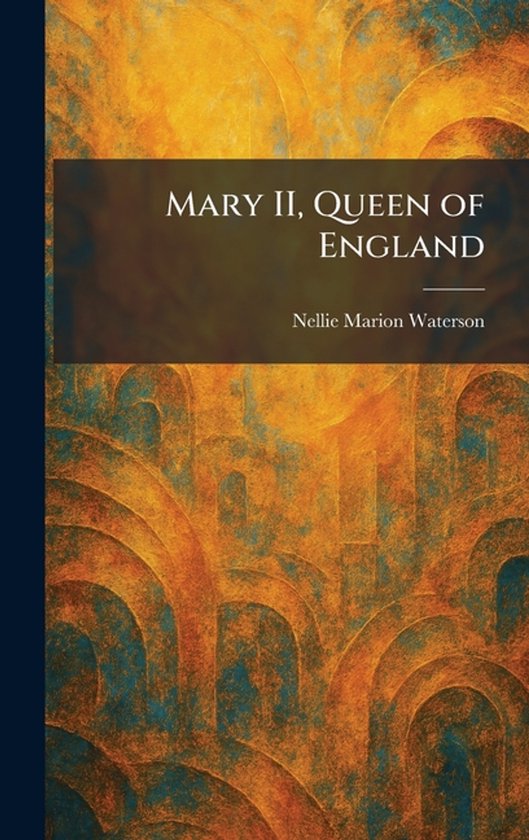
Mary II, Queen of England
Nellie Marion Waterson
- 14 februari 2026
- 9781025825083
Samenvatting:
"Mary II, Queen of England, 1689-1694" offers a scholarly and detailed exploration of the life and political influence of one of Britain's most significant yet often overshadowed monarchs. Set against the turbulent backdrop of the late seventeenth century, this work examines Mary's crucial role during the Glorious Revolution and her subsequent joint reign alongside her husband, William III. The narrative delves into the complexities of the Stuart succession, providing insight into the constitutional shifts that redefined the English monarchy during this transformative era.Author Nellie Marion Waterson provides a balanced portrait of a queen who navigated the profound tensions between her personal loyalty to her father, James II, and her religious and political duties to the state. Through a careful examination of historical records, the book highlights Mary's administrative capabilities, her patronage of the arts and religion, and her enduring popularity among the English people. This volume remains an essential resource for students of British history and those interested in the lives of female sovereigns who shaped the course of the nation's political and social development. Readers will find a comprehensive study of the era's diplomatic relations, internal conflicts, and the establishment of the Protestant succession.This work has been selected by scholars as being culturally important, and is part of the knowledge base of civilization as we know it. This work was reproduced from the original artifact, and remains as true to the original work as possible. Therefore, you may see the original copyright references, library stamps (as most of these works have been housed in our most important libraries around the world), and other notations in the work.This work is in the public domain in the United States of America, and possibly other nations. Within the United States, you may freely copy and distribute this work, as no entity (individual or corporate) has a copyright on the body of the work.As a reproduction of a historical artifact, this work may contain missing or blurred pages, poor pictures, errant marks, etc. Scholars believe, and we concur, that this work is important enough to be preserved, reproduced, and made generally available to the public. We appreciate your support of the preservation process, and thank you for being an important part of keeping this knowledge alive and relevant.