
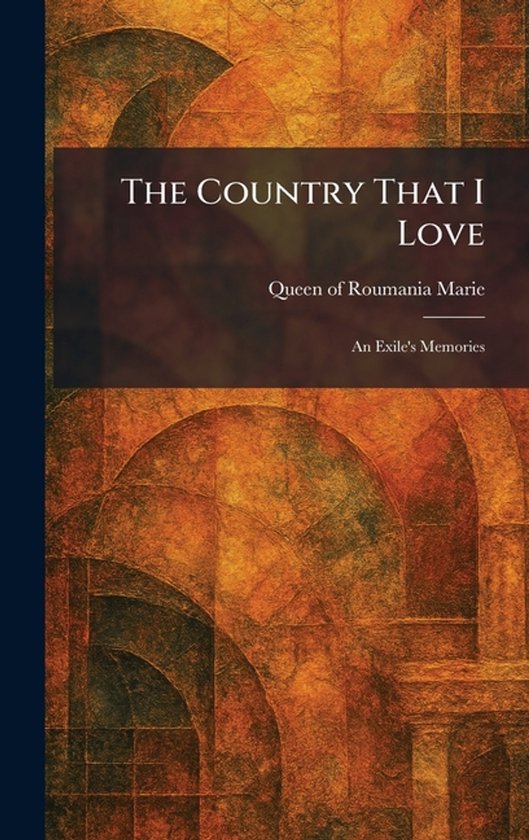
The Country That I Love
- 14 februari 2026
- 9781025576633
Samenvatting:
"The Country That I Love: An Exile's Memories" is a poignant and lyrical collection of reflections by Queen Marie of Romania, one of the most celebrated royal figures of the early 20th century. Written during a period of distance and reflection, the work serves as a heartfelt tribute to her adopted homeland, capturing the spirit, landscapes, and people of Romania through the eyes of a devoted sovereign. Queen Marie weaves together personal anecdotes and vivid descriptions of the Romanian countryside, from its rugged mountains and quiet villages to its ancient traditions and vibrant culture. The narrative is deeply infused with a sense of longing and profound affection, illustrating the unique bond between the Queen and her nation. As a granddaughter of Queen Victoria and a key diplomatic figure during World War I, Marie's perspective offers a rare blend of royal dignity and intimate, emotional observation. This work stands as a significant historical and literary document, reflecting the cultural identity of a nation in transition and the enduring love of a leader for her people. It remains an essential read for those interested in European royal history, travel literature, and the rich heritage of the Balkan region.This work has been selected by scholars as being culturally important, and is part of the knowledge base of civilization as we know it. This work was reproduced from the original artifact, and remains as true to the original work as possible. Therefore, you may see the original copyright references, library stamps (as most of these works have been housed in our most important libraries around the world), and other notations in the work.This work is in the public domain in the United States of America, and possibly other nations. Within the United States, you may freely copy and distribute this work, as no entity (individual or corporate) has a copyright on the body of the work.As a reproduction of a historical artifact, this work may contain missing or blurred pages, poor pictures, errant marks, etc. Scholars believe, and we concur, that this work is important enough to be preserved, reproduced, and made generally available to the public. We appreciate your support of the preservation process, and thank you for being an important part of keeping this knowledge alive and relevant.