
Comparative Political Economy-The AI Matrix
Daniel Mugge
- 16 december 2025
- 9781788218597
Samenvatting:
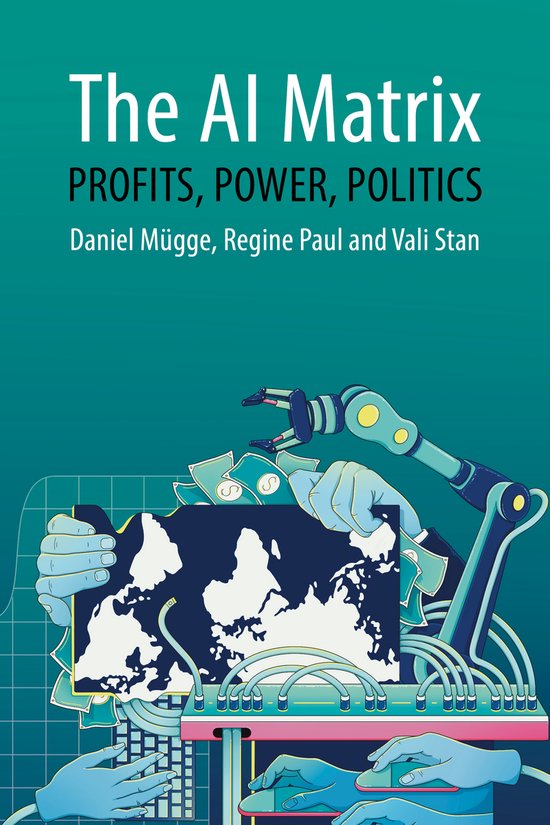
Artificial intelligence counts as today’s great transformational force reshaping our societies and economies. A perspective that is as common as it is wrong. Corporate profit-seeking and competitive politics have moulded AI from its inception, which serves to reinforce hierarchies between industries, in labour markets and across the globe.
Artificial intelligence (AI) is heralded as a revolutionary force in the global economy. But the transformation it brings is not simply about new technology as a driver of change. It is about who owns it, what they want to do with it, who can pay for it, and how other economic actors around the world – from legacy manufacturing firms in the Global North to farmers in the Global South – must adjust.
This book explores AI systems as products of unequal and conflictual power relations. It exposes grand AI narratives as rhetorical ammunition in political fights over tech futures and socio-economic distribution. Tech giants leverage infrastructure and data to cement their global dominance. Meanwhile, geopolitical competition between China and the United States increasingly dominates the AI economy, entrenching globe-spanning dependencies. The AI Matrix is an essential guide to the real-world economic dynamics that AI unleashes.