
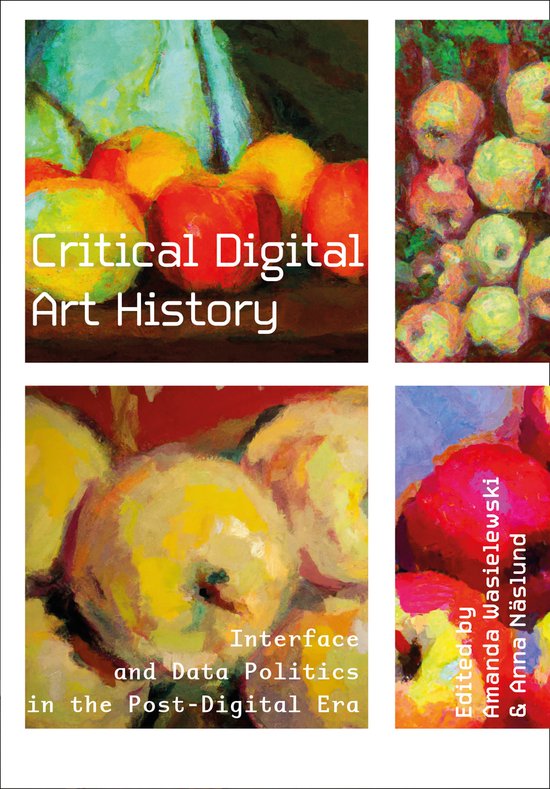
Critical Digital Art History
Amanda Wasielewski
- 08 november 2024
- 9781835950487
Samenvatting:
This anthology highlights emerging critical perspectives on digitization, computational methods and datafication in art history and the museum/heritage sector. The aim is to develop a deeper understanding of the theoretical and political aspects of the use of digital tools in these areas. 25b&w illus.
Digital art history has often aligned itself with the practical concerns of digital technology and the responsibilities of art institutions and associated institutional roles such as collection managers, information specialists, curators, and conservators. This emphasis on practicalities and implementation, while undeniably important, has often left little room for critical examination of the broader implications of digital technology and computational methodologies in art history.
A long-standing concern of the field – and a major focal point of this book – is museum and collecting practices in the digital era. While there is a certain degree of continuity in the field, there are also important shifts and changes to address – namely, the widespread uptake of artificial intelligence tools and increased attention to both the broader historical and societal aspects of the use of digital repositories and tools. This anthology seeks to address the dearth of critical reflection by critically assessing specific case study examples and considering the political dimensions associated with large-scale digitization and the application of digital tools within museums and collection management.
Amanda Wasielewski is an associate senior lecturer of digital humanities and associate professor of art history at Uppsala University in Sweden. Anna Näslund is professor of art history at Stockholm University in Sweden.
Digital Art History has often aligned itself with the practical concerns of digital technology and the responsibilities of art institutions and associated institutional roles such as collection managers, information specialists, curators, and conservators. This emphasis on practicalities and implementation, while undeniably important, has often meant that there is little room for critical examination of the broader implications of digital technology and computational methodologies in art history.
This anthology seeks to address the dearth of critical reflection by approaching the use of digital technology in art history from a theoretical perspective and critically assessing specific case study examples. This book also considers the political dimensions associated with the large-scale digitization and the application of digital tools within museums and collection management.
A long-standing concern of the field—and also a major focal point of this book—is museum and collecting practices in the digital era. While there is a certain degree of continuity in the field, there are some important shifts and changes too. One of the key changes is the widespread uptake of artificial intelligence tools and an increased attention to both the broader historical and societal aspects of the use of digital tools within museums and collection management.