
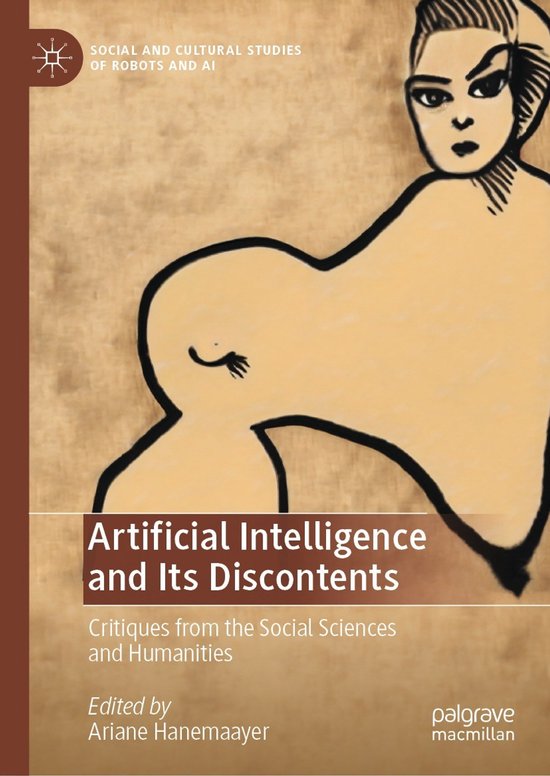
Social and Cultural Studies of Robots and AI- Artificial Int ...
Ariane Hanemaayer
- 02 februari 2022
- 9783030886141
Samenvatting:
The authors
analyse timely topics, including bias and language processing, responsibility
and machine learning, COVID-19 and AI in health technologies, bio-AI and
nanotechnology, digital ethics, AI and the gig economy, representations of AI in
literature and culture, and many more.
This book answer this below question by drawing on a range of critical approaches across the social sciences and humanities, including posthumanism, ethics and human values, media and communications, linguistics, governance and justice studies, surveillance studies, Black feminism, and social and political resistance. On what basis can we challenge Artificial Intelligence (AI)―its infusion, investment, and implementation across the globe? . The authors analyse timely topics, including bias and language processing, responsibility and machine learning, COVID-19 and AI in health technologies, bio-AI and nanotechnology, digit ethics, AI and the gig economy, and representations of AI in literature and culture. This book is for those who are currently working in the field of AI critique and disruption. It is also a book for those who want to learn more about how to doubt, question, challenge, reject, reform and otherwise reprise “AI” as it has been practiced and promoted.
Ariane Hanemaayer is Associate Professor at Brandon University and Visiting Scholar at the Centre for Research in Arts, Social Sciences and Humanities at the University of Cambridge. She is also Author of The Impossible Clinic: A critical sociology of evidence based medicine.
On what basis can we challenge Artificial Intelligence (AI) - its infusion, investment,
and implementation across the globe? This book answers this question by
drawing on a range of critical approaches from the social sciences and humanities,
including posthumanism, ethics and human values, surveillance studies, Black
feminism, and other strategies for social and political resistance. The authors
analyse timely topics, including bias and language processing, responsibility
and machine learning, COVID-19 and AI in health technologies, bio-AI and
nanotechnology, digital ethics, AI and the gig economy, representations of AI in
literature and culture, and many more. This book is for those who are currently
working in the field of AI critique and disruption as well as in AI development and
programming. It is also for those who want to learn more about how to doubt,
question, challenge, reject, reform and otherwise reprise AI as it been practiced
and promoted.