
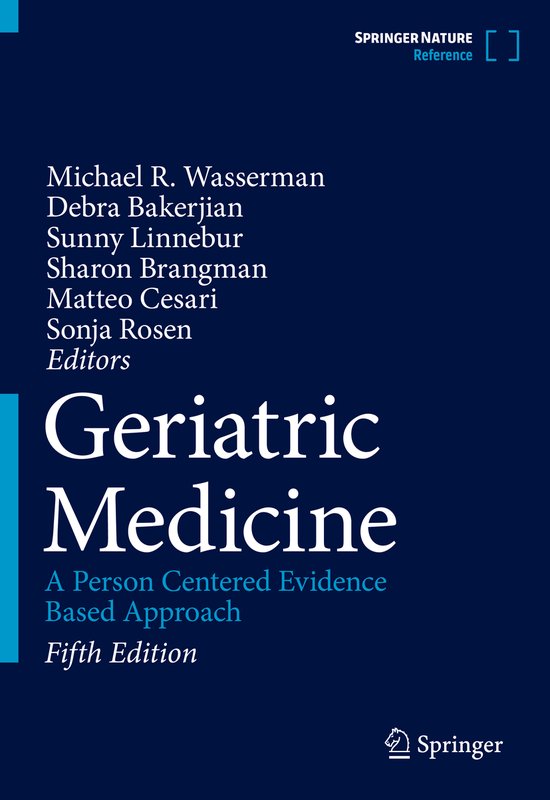
Geriatric Medicine
Michael R. Wasserman
- 20 februari 2024
- 9783030747190
Samenvatting:
It is essential that physicians, nurse practitioners, physician assistants, pharmacists, social workers and other health care professionals all be knowledgeable about thegeriatric approach to care.
Geriatric medicine varies from most other fields in medicine.
The fifth edition of this text presents a comprehensive and state-of the-art update that incorporates existing literature, clinical experience, and over 40 new peer-reviewed chapters. Written by interdisciplinary and interprofessional experts in geriatric medicine, this book serves as an unparalleled resource for all clinicians serving the needs of aging patients, the most rapidly increasing demographic across all nations.
The book begins with an overview of what makes geriatric medicine unique before delving into the most common symptoms, diseases, and syndromes as they present in older patients. It concludes with a review of key basic science elements. With a new focus on person centered care, this edition guides professionals of all specialties who may or may not be familiar with the unique needs of aging patients. The book covers the topics most vital to the previous edition—acute and chronic pain, home care, frailty, and others—while also including new concepts of equal importance, such as deprescribing, concepts in person centered and integrated care, and multimorbidity.
Geriatric Medicine, Fifth Edition, serves as the ultimate guide for all medical professionals encountering older patients, including those with or without training in geriatric medicine, general practitioners, subspecialists, hospitalists, nurses and all others.
Both volumes sold as a combined set for a one-time purchase!
Older adults represent the most rapidly growing demographic in the U.S. and in many developed countries around the world. The field of geriatric medicine is still relatively young, and is only recently seeing a significant increase in peer reviewed literature. Medicare and Medicaid expenditures related to older adults are nearly a trillion dollars/year in the US. How our healthcare system cares for older adults, and how those older adults navigate an increasingly complex system, is of the utmost importance. According to the Institute of Medicine, physicians and other healthcare professionals receive an inadequate amount of training in geriatric medicine. Geriatric medicine is based on the concept of delivering person centered care with a focus on function and quality of life. It is essential that physicians, nurse practitioners, physician assistants, pharmacists, social workers and other health care professionals all be knowledgeable about thegeriatric approach to care.
Geriatric medicine varies from most other fields in medicine. While many specialties function on the basis of evidence-based literature, geriatricians and other clinicians caring for older adults must integrate relatively limited evidence with variable physiological changes and complex psychosocial determinants. Geriatricians are used to caring for 90 year olds with multiple chronic illnesses. Their variable physiology leads to uncertain responses to pharmacotherapy, and their personal goals and wishes need to be incorporated into any plan of care. Practicing geriatric medicine requires the ability to see patterns. But it goes one step further, as the rules are constantly in flux. Every patient is an individual with particular needs and goals. In order to provide true person centered care to older adults, one has to incorporate these factors into the decision making process.
The proposed handbookis designed to present a comprehensive and state-of the-art update that incorporates existing literature with clinical experience. Basic science and the physiology of aging create a background, but are not the main focus. This is because every chapter has been written through the lens of “person centered care.” This book is about focusing on what matters to the person, and how that is not always about pathology and physiology. The reader generally will not find simple solutions to symptoms, diseases and syndromes. In fact, the key to caring for geriatric patients is the ability to think both critically and divergently at the same time. Geriatrics encompasses multiple disciplines and spans all of the subspecialties. It requires knowledge of working within an interdisciplinary team. It requires an appreciation of how quality of life varies with each individual and creates treatment and care plans that also vary. And most of all, it requires a firm commitment to first learning who the person is so that all of the necessary data can be analyzed and integrated into a true person centered plan of care. This book aims to serve as an unparalleled resource for meeting these challenges. Updated and revised from the previous edition, this text features over 40 new peer-reviewed chapters, new references, and a wide array of useful new tools that are updated on a regular basis by interdisciplinary and interprofessional experts in geriatric medicine.