
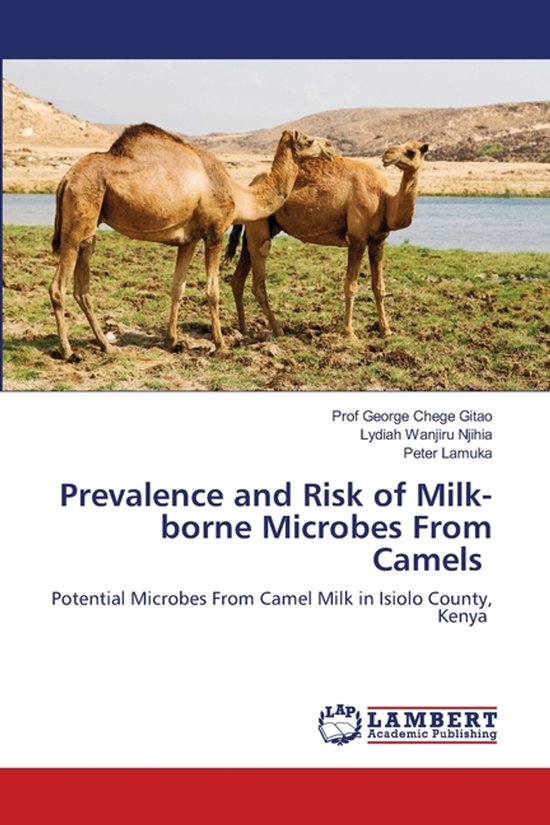
Prevalence and Risk of Milk-borne Microbes From Camels
Chege Gitao
- 20 juli 2021
- 9786203930870
Samenvatting:
The camel population in Kenya is over 3 million camels kept under harsh climatic conditions in arid and semi-arid areas and is the main source of milk especially in drought conditions. Although potential sources of zoonotic microbes have been documented in other animals, it has not been done in camels. The vast ASALS in Kenya experience harsh climatic conditions, lack of water, high temperatures, insecurity and poor infrastructure which are unattractive to trained veterinarians. This leads to community based animal health workers as the sole support system for veterinary services, misuse of antibiotics which causes antimicrobial resistance. This book describes the risk factors associated with zoonotic agents in camel milk and the presence of these organisms in the animals and milk. It also describes the prevalence of antibiotic resistance in the milk resulting from widespread use of unregulated antibiotics. This will shed light on livestock management in arid areas, an area hitherto neglected, awareness creation and prudent use of antimicrobials. It should be especially valuable to development agencies involved in support of pastoral communities in Africa and Asia.