
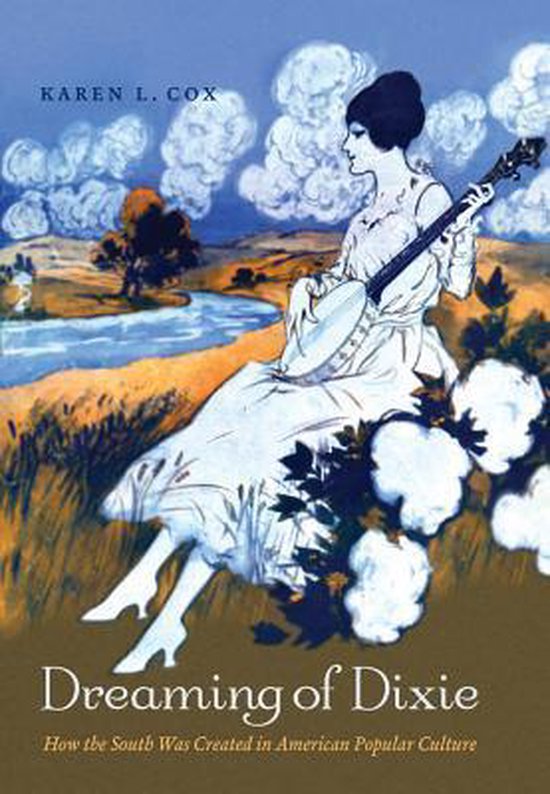
Dreaming of Dixie
Karen L. Cox
- 30 augustus 2013
- 9781469609867
Samenvatting:
From the late nineteenth century through World War II, popular culture portrayed the American South as a region ensconced in its antebellum past, draped in moonlight and magnolias, and represented by such southern icons as the mammy, the belle, and the chivalrous planter. Karen Cox shows that the chief purveyors of this constructed nostalgia for the Old South were outsiders of the region.
From the late nineteenth century through World War II, popular culture portrayed the American South as a region ensconced in its antebellum past, draped in moonlight and magnolias, and represented by such southern icons as the mammy, the belle, the chivalrous planter, white-columned mansions, and even bolls of cotton. In Dreaming of Dixie , Karen Cox shows that the chief purveyors of this constructed nostalgia for the Old South were outsiders of the region, especially advertising agencies, musicians, publishers, radio personalities, writers, and filmmakers playing to consumers' anxiety about modernity by marketing the South as a region still dedicated to America's pastoral traditions. Cox examines how southerners themselves embraced the imaginary romance of the region's past, particularly in the tourist trade as southern states and cities sought to capitalize on popular perceptions by showcasing their Old South heritage. Only when television emerged as the most influential medium of popular culture did views of the South begin to change, as news coverage of the civil rights movement brought images of violence, protest, and conflict in the South into people's living rooms. Until then, Cox argues, most Americans remained content with their romantic vision of Dixie.
Cox shows that the chief purveyors of nostalgia for the Old South were outsiders of the region, playing to consumers' anxiety about modernity by marketing the South as a region still dedicated to America's pastoral traditions. Cox examines how southerners themselves embraced the imaginary romance of the region's past.