
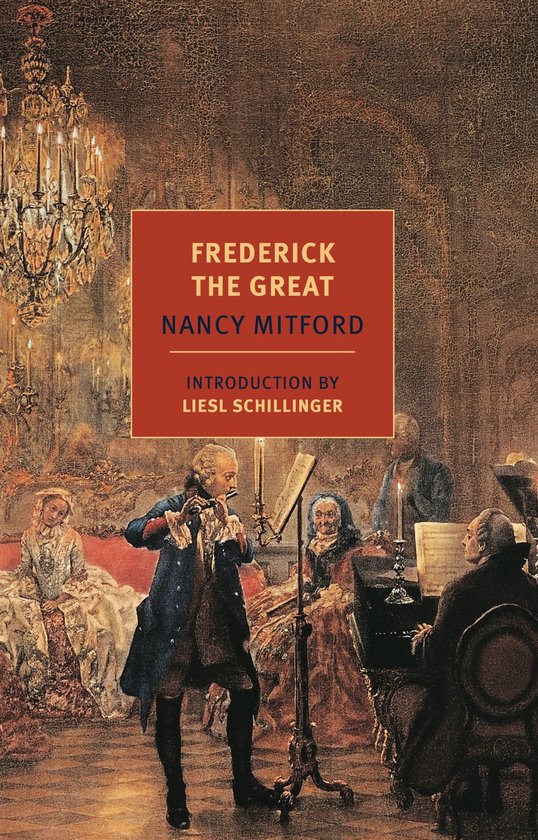
Frederick the Great
Nancy Mitford
- 23 juli 2013
- 9781590176238
Samenvatting:
The Prussian king Frederick II is today best remembered for successfully defending his tiny country against the three great European powers of France, Austria, and Russia during the Seven Years War. But in his youth, tormented by a spectacularly cruel and dyspeptic father, the future military genius was drawn to the flute and French poetry, and throughout his long life counted nothing more important than the company of good friends and great wits. This was especially evident in his longstanding, loving, and vexing relationship with Voltaire. An absolute ruler who was allergic to pomp, a non-hunter who wore no spurs, a reformer of great zeal who maintained complete freedom of the press and religion and cleaned up his countrys courts, a fiscal conservative and patron of the arts, the builder of the rococo palace Sans Souci and improver of the farmers lot, maddening to his rivals but beloved by nearly everyone he met, Frederick wasnotwithstanding a penchant for merciless teasingarguably the most humane of enlightened despots.
In Frederick the Great, a richly entertaining biography of one of the eighteenth centurys most fascinating figures, the trademark wit of the author of Love in a Cold Climate finds its ideal subject.