
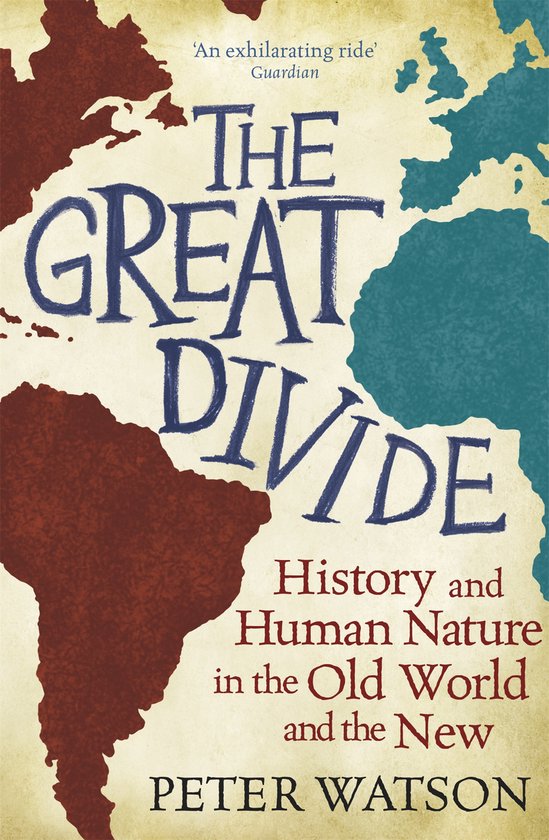
Great Divide
Peter Watson
- 07 februari 2013
- 9780753828458
Samenvatting:
How the division of the Americas from the rest of the world affected human history.
'In drawing together evidence from complex strands of archaeology, climatology, genetics and religious symbolism, Watson is compulsively speculative' Independent
Around 15,000 BC humans spread out from Africa, arriving in Siberia during the Ice Age. Locked up in ice sheets, the world's oceans were 400 feet lower than today, allowing humans to walk across the Bering Strait and enter America. When then Ice Age ended, the Strait refilled with water. This isolated the Americas and created a division - with two populations unaware of each other - until Columbus 'discovered' America in AD 1492.
The Great Divide compares and contrasts the development of humans in the 'Old World' and the 'New', offering a revealing insight into what it means to be human. Watson identifies a three-stage process fundamental to shaping civilizations throughout the world, using an origional synthesis of archaeology, anthropology, meteorology, cosmology and mythology to give a new shape - and a new understanding - to human history.
Phoenix
History
How the division of the Americas from the rest of the world affected human history.
In 15,000 B.C. early humankind, who had evolved in Africa tens of thousands of years before and spread out to populate the Earth, arrived in Siberia, during the Ice Age. Because so much water was locked up at that time in the great ice sheets, several miles thick, the levels of the world's oceans were much lower than they are today, and early humans were able to walk across the Bering Strait, then a land bridge, without getting their feet wet and enter the Americas.
Then, the Ice Age came to an end, the Bering Strait refilled with water and humans in the Americas were cut off from humans elsewhere in the world. This division - with two great populations on Earth, each oblivious of the other - continued until Christopher Columbus 'discovered' America just before 1500 A.D. This is the fascinating subject of THE GREAT DIVIDE, which compares and contrasts the development of humankind in the 'Old World' and the 'New' between 15,000 B.C. and 1500 A.D. This unprecedented comparison of early peoples means that, when these factors are taken together, they offer a uniquely revealing insight into what it means to be human.
THE GREAT DIVIDE offers a masterly and totally original synthesis of archaeology, anthropology, geology, meteorology, cosmology and mythology, to give a new shape - and a new understanding - to human history.