
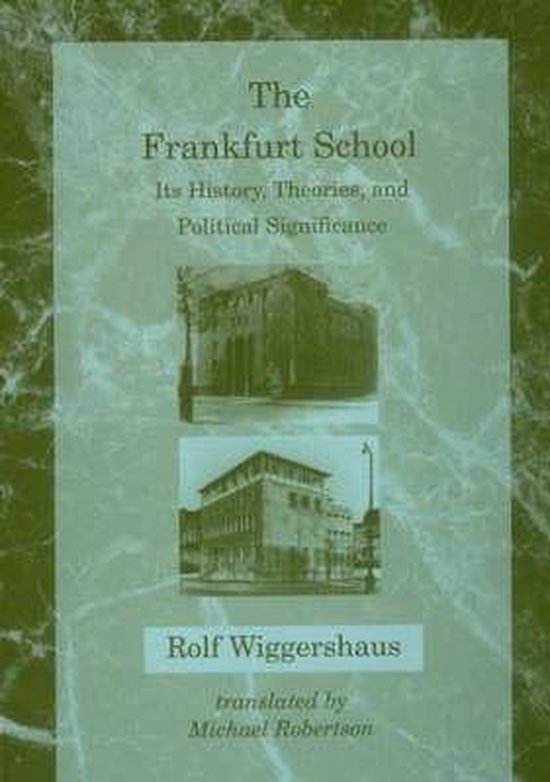
The Frankfurt School
Rolf Wiggershaus
- 23 februari 1995
- 9780262731133
Samenvatting:
This is the definitive study of the history and accomplishments of the FrankfurtSchool. It offers elegantly written portraits of the major figures in the school's history as wellas overviews of the various positions and directions they developed from the founding years justafter World War I until the death of Theodor Adorno in 1969.The book is based on documentary andbiographical materials that have only recently become available. As the narrative follows theInstitute for Social Research from Frankfurt am Main to Geneva, New York, and Los Angeles, and thenback to Frankfurt, Wiggershaus continually ties the evolution of the school to the changingintellectual and political contexts in which it operated. He also interweaves these accounts withincisive summaries of substantive works by Horkheimer, Adorno, Benjamin, Fromm, Kirchheimer,Lowenthal, Marcuse, Neumann, Pollock, and Habermas.The book is self-contained and can serve as ageneral introduction to critical theory, but it also has a wealth of new material to offer those whoare familiar with this tradition but would like to learn more about its history and context.Studiesin Contemporary German Social Thought