
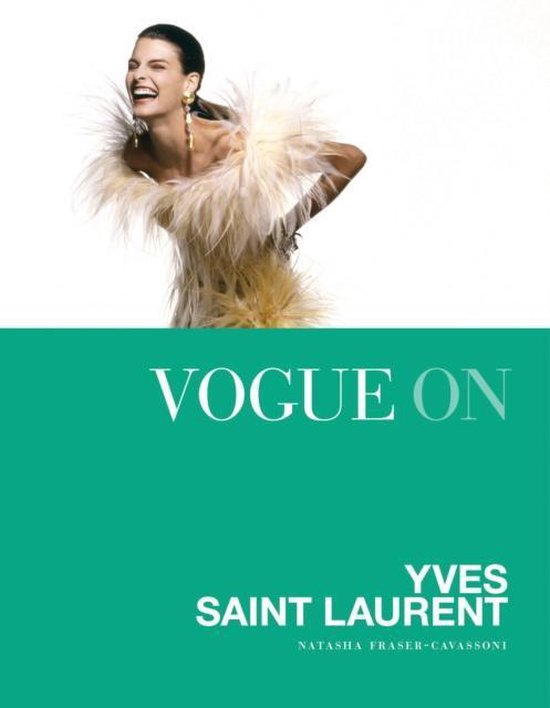
Vogue On Yves Saint Laurent
Natasha Fraser
- 24 september 2015
- 9781849495554
Samenvatting:
A completely fresh look at the fashion designer Yves Saint Laurent, and the way he revolutionised women's clothing culture.
A tortured genius and one of most influential designers of the twentieth century, Yves Saint Laurent was responsible for revolutionising the way women dressed and viewed themselves.
During a wildly creative career stretching from 1958 to 2002 Saint Laurent established a reputation for accessible, flawlessly cut clothes. He became an overnight sensation in 1958, aged 21, when he showed his 'Trapeze' collection, his first for the House of Christian Dior, following the master's death.
Four years later, Saint Laurent opened his own couture house and within a few seasons was hailed by Vogue's Diana Vreeland as 'the pied piper of fashion'. Viewed as a master colourist and admired for his choice of sultry fabrics, his great gift was creating lasting styles - described by Vogue as 'stockpiles of essentials in times of famine' - that flattered all shapes and sizes. As well as designing wardrobe classics like the 'Le Smoking' tuxedo for women, the Safari jacket, the trench and the pea coat, and introducing trousers into haute couture, he also dressed international style icons such as Catherine Deneuve, Marella Agnelli and Lauren Bacall.
With his nose for the zeitgeist, Saint Laurent recognised the global power of street fashion and launched Rive Gauche, his ready-to-wear boutique line in 1966. Christened 'The Saint' by Vogue, every element of his fashion empire, which included exhilarating couture collections, exquisite accessories and sought-after perfumes, was captured by Vogue's writers and leading photographers like Richard Avedon, David Bailey and Norman Parkinson.