
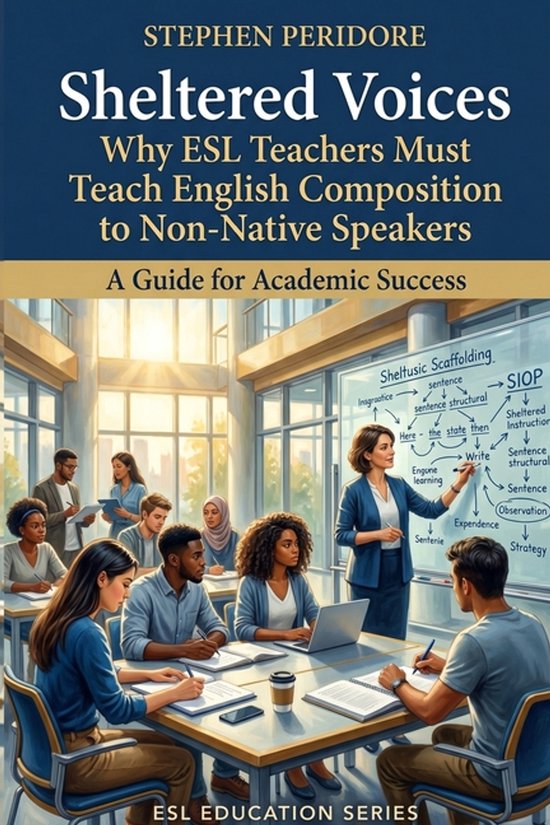
Sheltered Voices
Stephen Peridore
- 03 mei 2026
- 9798195364939
Samenvatting:
The Sheltered Advantage addresses a hidden crisis in American higher education: the systematic failure of non-native English speakers in mainstream composition classrooms. The manuscript argues that the default model of 'mainstreaming'-placing multilingual learners in writing courses designed for native speakers and taught by instructors without specialized training-is a structural failure that leads to high withdrawal and failure rates. Drawing on four decades of research in Second Language Acquisition (SLA), the book demonstrates that native speaker intuition is no substitute for pedagogical expertise. It introduces essential frameworks such as the SIOP Model, the BICS-CALP distinction, and contrastive rhetoric to provide a blueprint for institutional reform. By advocating for 'sheltered' instruction led by ESL-trained professionals, the author offers a roadmap to move from a deficit-based remedial model to a specialized, asset-based approach. This book is a call to action for administrators and faculty to align their practices with legal and ethical mandates for equal access, ensuring that every student receives instruction matched to their specific linguistic needs. It is both a theoretical defense of specialized pedagogy and a practical manual for achieving academic justice in an increasingly multilingual world.