
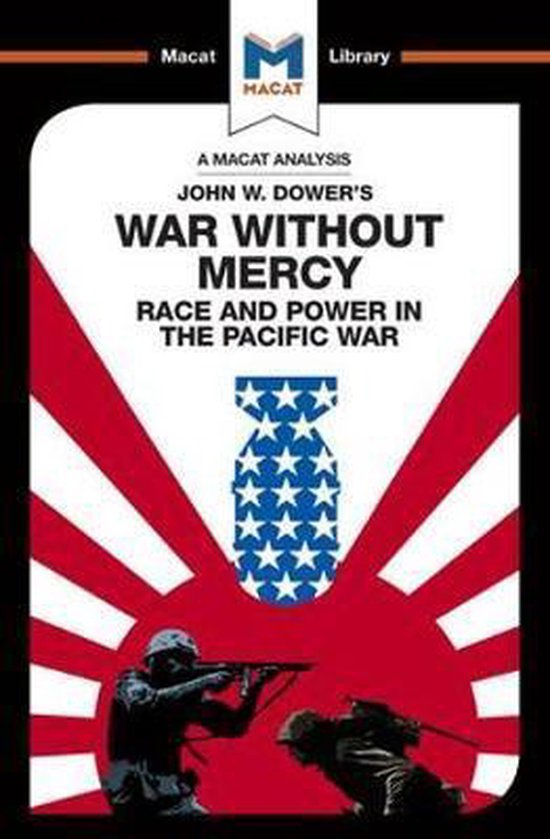
An Analysis of John W. Dower's War Without Mercy
Vincent Sanchez
- 04 juli 2017
- 9781912128846
Samenvatting:
War Without Mercy examines Japanese-American relations during World War II and investigates links between popular culture, stereotypes, and extreme violence. Dower argues that the concept of racism—used equally by both sides—underpinned the military conflict and led to a particularly brutal war in the Pacific and East Asia.
John Dower’s War Without Mercy is an attempt to resolve the problem of why the United States fought World War II so very differently in the Pacific and European theaters. Specifically, the author sets out to explain why there was such vicious hostility between the US and Japan during the conflict. This was not merely a matter of outrage at Pearl Harbor, and understanding the phenomenon required going beyond the usual strategic, diplomatic and operational records that fuel most histories of war. Dower looked instead for alternate possibilities – and found them.
His book argues that the viciousness that marked fighting in the Pacific had deep roots in popular culture which created frightening racial stereotypes of the enemy on both sides of the ocean. Dower's focus on ‘low culture’ proved to be a useful way of generating alternative possibilities to mainstream thinking about US-Japanese relations. The thinking underpinning the book was innovative, and was challenged by some peers who failed to recognise how profoundly revealing material such as cartoons and cheap magazines could be. But the result was one of the most significant studies of 20th-century history yet written – one that yields a strong, well-reasoned and persuasive solution to the problem posed.