
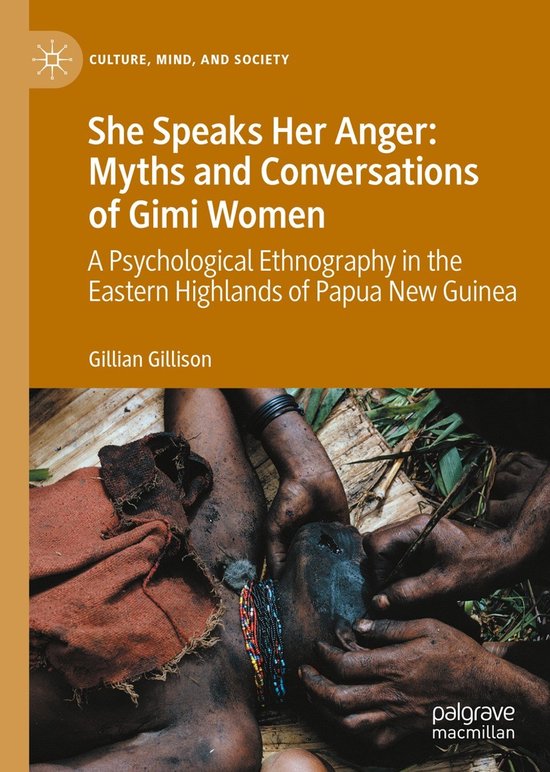
She Speaks Her Anger Myths and Conversations of Gimi Women
Gillian Gillison
- 13 april 2021
- 9783030493516
Samenvatting:
Taking a novel approach that adapts Freud’s theory of the Primal Crime, this book examines a wealth of ethnographic data on the Gimi of the Eastern Highlands of Papua New Guinea, focusing on women’s lives, myths, and rituals.
Taking a novel approach that adapts Freud’s theory of the Primal Crime, this book examines a wealth of ethnographic data on the Gimi of the Eastern Highlands of Papua New Guinea, focusing on women’s lives, myths, and rituals. Women’s and men’s separate myths and rites may be ‘read’ as a cycle of blame about which sex caused the ills of human existence and is still at fault. However, the author demonstrates that in public rites of exchange in which both sexes participate, men appropriate and subvert women’s usages as a ritual strategy to ‘undo’ motherhood and confiscate children at puberty. In doing so, she reveals how Gimi women both rebel against the male-dominated social order and express understanding of why they also acquiesce.
The result of decades of fieldwork, writing and reflection, this book offers an analysis of Gimi women’s complex understanding of their situation and presents a nuanced picture of women in a society dominated by men. It represents an important contribution to New Guinea ethnography that will appeal to students and scholars of psychoanalysis, gender studies, and cultural, social and psychoanalytic anthropology.
Gillian Gillison is Associate Professor at the Department of Anthropology, University of Toronto, Canada.
Taking a novel approach that adapts Freud’s theory of the Primal Crime, this book examines a wealth of ethnographic data on the Gimi of the Eastern Highlands of Papua New Guinea, focusing on women’s lives, myths, and rituals. Women’s and men’s separate myths and rites may be ‘read’ as a cycle of blame about which sex caused the ills of human existence and is still at fault. However, the author demonstrates that in public rites of exchange in which both sexes participate, men appropriate and subvert women’s usages as a ritual strategy to ‘undo’ motherhood and confiscate children at puberty. In doing so, she reveals how Gimi women both rebel against the male-dominated social order and express understanding of why they also acquiesce.
The result of decades of fieldwork, writing and reflection, this book offers an analysis of Gimi women’s complex understanding of their situation and presents a nuanced picture of women in a society dominated by men. It represents an important contribution to New Guinea ethnography that will appeal to students and scholars of psychoanalysis, gender studies, and cultural, social and psychoanalytic anthropology.