
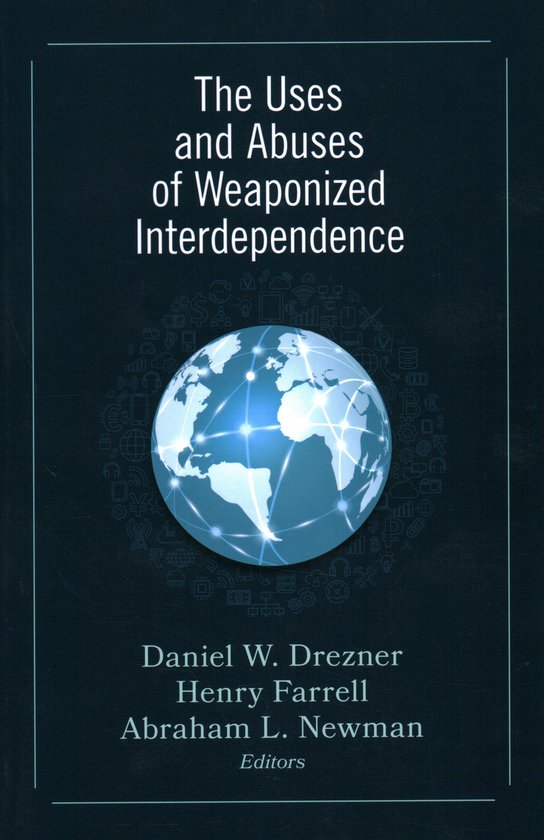
The Uses and Abuses of Weaponized Interdependence
Drezner Farrell N
- 02 maart 2021
- 9780815738374
Samenvatting:
In exploring the conditions under which China, Russia, and the United States might be expected to weaponize control of information and manipulate the global economy, the contributors to this volume challenge scholars and practitioners to think differently about foreign economic policy, national security, and statecraft for the twenty-first century.
How globalized information networks can be used for strategic advantage
For a century, economic interdependence was perceived as having a moderating effect on international relations. In recent years, however, we have seen China, Russia, and the United States weaponize economic networks that they control in arenas ranging from finance and energy to transport. In exploring the conditions under which weaponized interdependence is attempted, the contributors to this volume challenge scholars and practitioners to think differently about foreign economic policy, national security, and statecraft for the twenty-first century. What areas of the global economy are most vulnerable to unilateral control of information and financial networks? How sustainable is the use of weaponized interdependence? What are the possible responses from targeted actors? And can the open global economy endure if weaponized interdependence becomes a default tool for managing international relations?
How globalized information networks can be used for strategic advantage
Until recently, globalization was viewed, on balance, as an inherently good thing that would benefit people and societies nearly everywhere. Now there is growing concern that some countries will use their position in globalized networks to gain undue influence over other societies through their dominance of information and financial networks, a concept known as weaponized interdependence.
In exploring the conditions under which China, Russia, and the United States might be expected to weaponize control of information and manipulate the global economy, the contributors to this volume challenge scholars and practitioners to think differently about foreign economic policy, national security, and statecraft for the twenty-first century. The book addresses such questions as: What areas of the global economy are most vulnerable to unilateral control of information and financial networks? How sustainable is the use of weaponized interdependence? What are the possible responses from targeted actors? And how sustainable is the open global economy if weaponized interdependence becomes a default tool for managing international relations?