
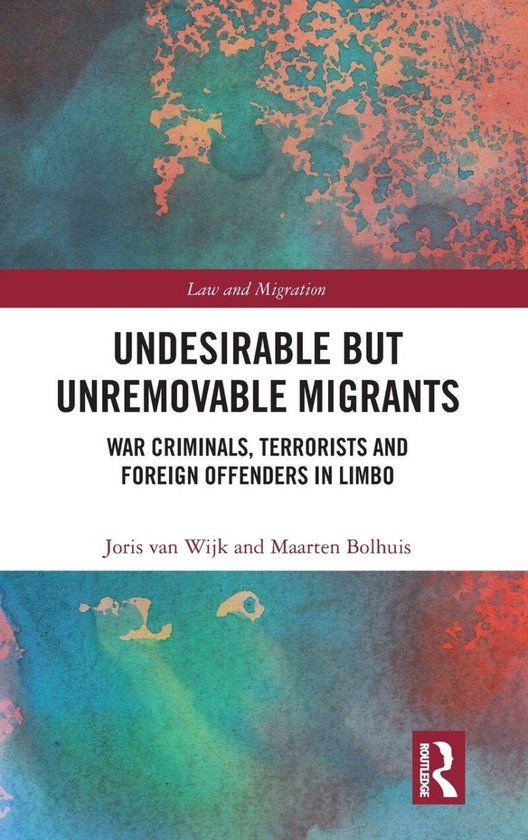
Law and Migration- Undesirable but Unremovable Migrants
Joris Van Wijk
- 04 maart 2026
- 9781041131892
Samenvatting:
Alleged 'criminal' migrants who find themselves trapped, unwanted in the countries hosting them but unable to be deported, are reffered to as Undesirable But Unremovable migrants (UBUs). This book traces the emergence of UBUs, shows how their numbers have increased over time, and reveals the inability of states to develop policy responses.
Across the globe, tens of thousands of alleged ‘criminal’ migrants find themselves trapped in limbo. They are unwanted in the countries hosting them but cannot be deported because they are stateless, because human rights law or lack of political will prevents it, or because they themselves do not cooperate. These individuals – referred to as undesirable but unremovable migrants (UBUs) – include former World War II concentration camp guards, minor drug traffickers, rapists, acquitted genocidaires, and children of alleged terrorists. Their continued presence in host countries often sparks intense political debate, complex legal proceedings, and public controversy. In some cases, they are passed back and forth between multiple countries.
Taking a historical and global perspective, this book traces the emergence of UBUs, shows how their numbers have increased dramatically over time, and reveals the persistent inability of states to develop coherent policy responses. This failure has led to politically charged environments in host countries and profound challenges for the migrants themselves.
The book benefits anyone engaged in the study, development, or implementation of governmental policies concerning migrants accused of being involved in crime.