
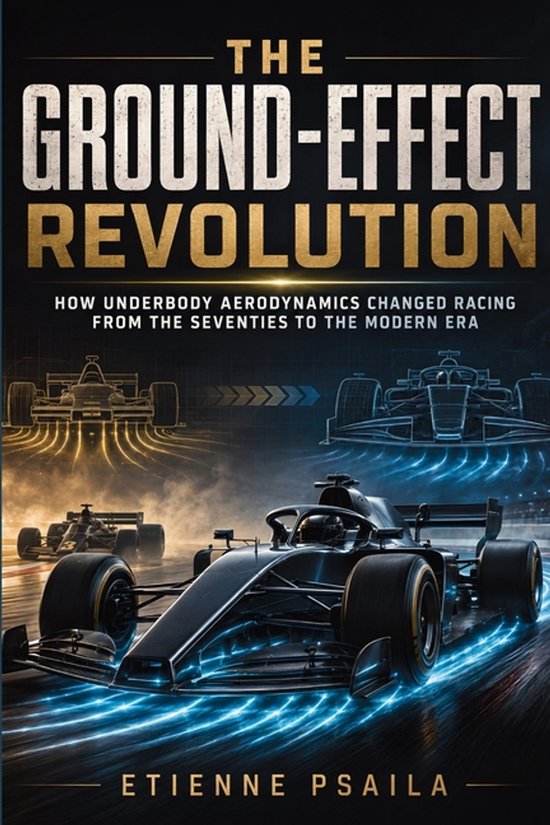
The Ground-Effect Revolution
Etienne Psaila
- 11 juni 2026
- 9798901947234
Samenvatting:
From the radical experiments of the 1970s to the controlled underfloor tunnels of the modern era, The Ground-Effect Revolution tells the fact-based story of how racing engineers learned to turn the underside of a car into one of motorsport's most powerful performance tools. This professionally researched narrative follows the evolution of underbody aerodynamics across Formula One, endurance racing, American open-wheel competition, touring cars, GT racing, and modern prototypes. It explains how wings, skirts, tunnels, diffusers, fan cars, flat-bottom rules, double diffusers, blown diffusers, CFD, porpoising, and modern regulation changed the relationship between speed, grip, safety, and design. Written in a clear, flowing style, the book traces the line from early streamlining and Chaparral's experimental machines to Lotus's championship-winning ground-effect cars, Group C prototypes, IndyCar developments, Le Mans Hypercars, and Formula One's 2022 return to underfloor-generated downforce. It is a story of engineering brilliance, regulatory conflict, driver courage, and the invisible aerodynamic forces that reshaped modern racing from beneath the floor.