
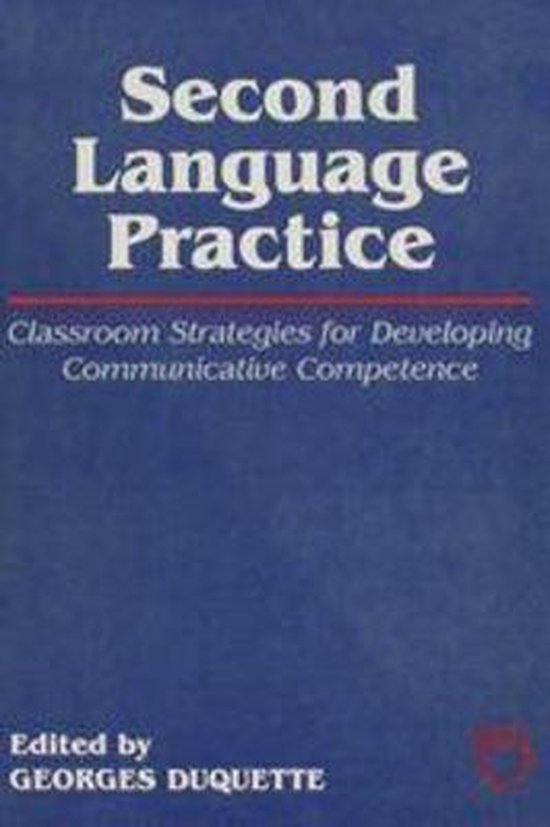
Second Language Practice
Georges Duquette
- 22 september 1995
- 9781853593055
Samenvatting:
This book offers teachers ideas on how to use the communicative approach to develop second language skills in their students at various levels of competence development. Topics include how to implement this approach in the classroom; which specific skills should be developed, at which levels, and what strategies can be used.
Over the last twenty five years, many theorists specialising in second language acquisition have promoted the communicative approach. Their arguments have been very convincing, but many school boards and teachers remain unsure as to how to implement this approach in the classroom; they do not know which specific skills should be developed, at which levels, or what strategies should be used. Since teachers are practical people, they need a publication which offers them ideas on how to develop second language skills in their students at various levels of competence development. We now know enough about the acquisition process that we can provide clear theoretical directions and practical examples of strategies consistent with second language theory. There is more than one way of getting students to develop communicative competence and there is always room for sharpening specific skills and adapting them to a variety of social contexts which are themselves culturally specific. Nevertheless, we do need to get started, and this book attempts to provide some leadership in this direction by bridging current theory with classroom practice while, at the same time, emphasising classroom strategies. Innovative teachers and administrators can then continue the process, add or subtract to the repertoire of strategies, in accordance with their student and programme needs.