
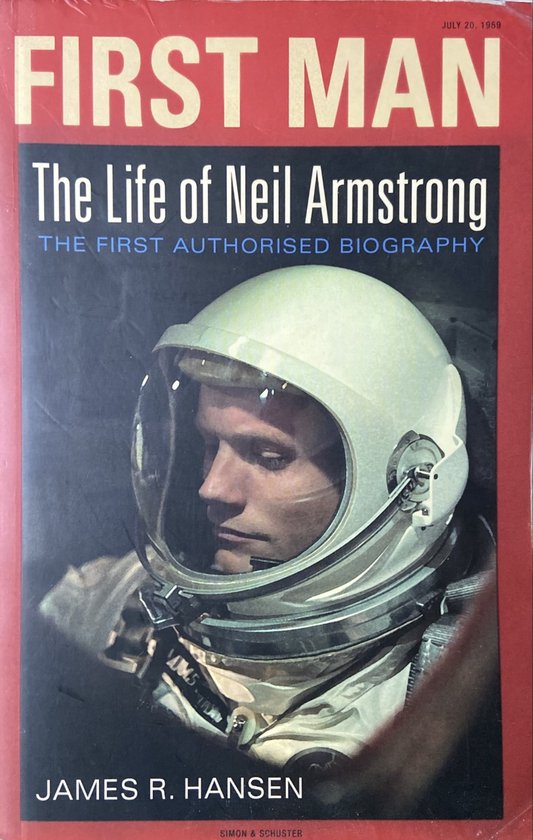
First Man the Life of Neil Armstrong
James Hansen
- 31 oktober 2005
- 9780743276078
Samenvatting:
The book describes Armstrong's early life as pleasant and broadly conventional. As a young man, he became increasingly fascinated by aircraft and flying, and earned his pilot's licence before learning to drive an automobile. Armstrong's father is quoted as saying his son "never had a girl" and "didn't need a car" but simply "had... to get out to that airport."[1][2]
The young Armstrong became a naval aviator. Management of the National Aeronautics and Space Administration (NASA) took an interest in Armstrong's combination of calmness and personal skill, coupled with his above-average intellect. Although contrasting somewhat with many of his colleagues, the Apollo 11 crew wound up as "amiable strangers", he attracted widespread respect. The fact that Armstrong got chosen to be "first down" on the lunar surface was a surprise, with astronaut Edwin "Buzz" Aldrin Jr. being expected to get priority. The mission itself proceeded spectacularly well, and Armstrong delivered his famous line: "That's one small step for a man, one giant leap for mankind."[1][2]
The historic nature of the event meant that Armstrong had to adapt to being one of the most famous men on the planet, a peculiar situation which he found challenging. Given the gravity of the Apollo program and the sacrifices made for the lunar mission to succeed, Armstrong felt determined to make sure that his status as the "first man on the Moon" was never exploited for anyone's petty gain. Interested in spreading his knowledge to younger generations, he eschewed a celebrity status by serving as a lecturer in engineering at the University of University of Cincinnati While shying away from the personal spotlight, as an individual, he spent decades advancing the cause of further spaceflight by providing advice to those at NASA, keeping in close touch with multiple figures.[1][2]