
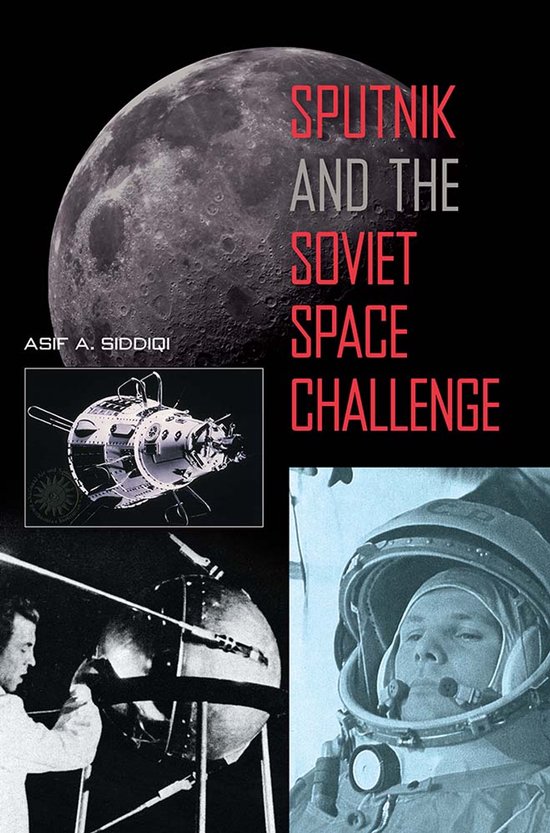
Sputnik and the Soviet Space Challenge
Asif A. Siddiqi
- 01 februari 2003
- 9780813026275
Samenvatting:
First published by NASA in 2000 as ""Challenge to Apollo"", this volume, together with a second volume entitled ""The Soviet Space Race with Apollo"", presents a comprehensive history of the Soviet-manned space programmes covering a period of 30 years.
First published by NASA in 2000 as ""Challenge to Apollo"", this volume, together with a second volume entitled ""The Soviet Space Race with Apollo"", presents a comprehensive history of the Soviet-manned space programmes covering a period of 30 years, from the end of World War II, when the Soviets captured German rocket technology, to the collapse of their moon programme in the mid-1970s. The spectacular Soviet successes of Sputnik - the first Earth satellite (1957) - and Yuri Gagarin - the first man in space (1961) - shocked US leaders and prompted President John F. Kennedy to set the goal of landing a man on the moon before the end of the 1960s. The moon race culminated with the historic landing of Neil Armstrong and Buzz Aldrin on the moon in 1969 (coincidentally, the first Soviet unmanned moon probe crashed on its surface while the American astronauts were at Tranquility Base). The epic story of the Soviet space programme remained shrouded in secrecy until the unprecedented opening of top secret documents. Based almost entirely on these Russian-language sources and numerous interviews with veterans, Siddiqi's book breaks through the rumours, hearsay and speculation that characterized books on the Soviet space programme published during the Cold War years. Supplementing the text with dozens of previously classified photographs, he weaves together the technical, political and personal history of the major Soviet space programmes, providing the other side of the history of human space flight.