
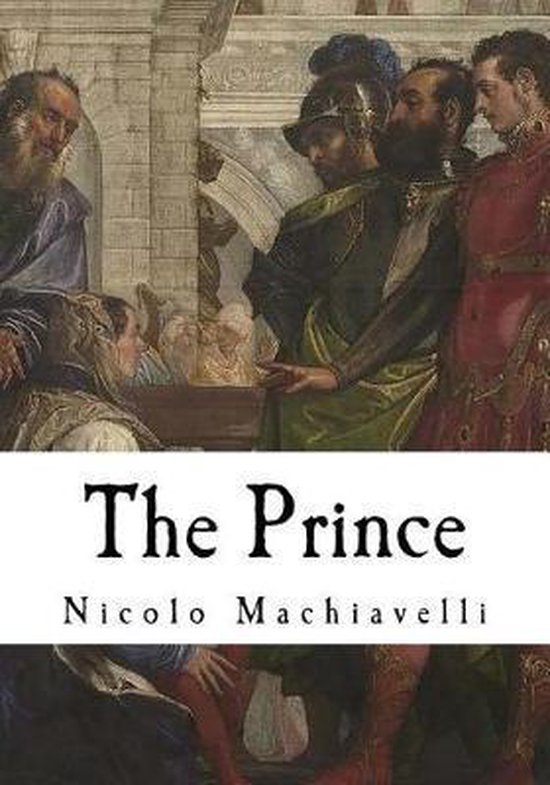
Classic Literature - The Prince-The Prince
Nicolo Machiavelli
- 14 juni 2018
- 9781721157594
Samenvatting:
This edition contains the English translation and the original text in Italian.
''The Prince'' (Italian: ''Il Principe'') is a 16th-century political treatise by the Italian diplomat and political theorist Niccolò Machiavelli. From correspondence a version appears to have been distributed in 1513, using a Latin title, ''De Principatibus'' (''About Principalities''). However, the printed version was not published until 1532, five years after Machiavelli's death. This was done with the permission of the Medici pope Clement VII, but ''long before then, in fact since the first appearance of the 'Prince' in manuscript, controversy had swirled about his writings''. Although it was written as if it were a traditional work in the ''mirrors for princes'' style, it is generally agreed that it was especially innovative. This is only partly because it was written in the vernacular Italian rather than Latin, a practice which had become increasingly popular since the publication of Dante's ''Divine Comedy'' and other works of Renaissance literature. ''The Prince'' is sometimes claimed to be one of the first works of modern philosophy, especially modern political philosophy, in which the effective truth is taken to be more important than any abstract ideal. It was also in direct conflict with the dominant Catholic and scholastic doctrines of the time concerning how to consider politics and ethics. Although it is relatively short, the treatise is the most remembered of Machiavelli's works and the one most responsible for bringing the word ''Machiavellian'' into usage as a pejorative. It also helped make ''Old Nick'' an English term for the devil, and even contributed to the modern negative connotations of the words ''politics'' and ''politician'' in western countries. In terms of subject matter it overlaps with the much longer ''Discourses on Livy'', which was written a few years later. In its use of near-contemporary Italians as examples of people who perpetrated criminal deeds for politics, another lesser-known work by Machiavelli which ''The Prince'' has been compared to is the ''Life of Castruccio Castracani''.
''Il Principe'' (titolo originale in lingua latina: ''De Principatibus'', lett. ''Sui Principati'') è un trattato di dottrina politica scritto da Niccolò Machiavelli nel 1513, nel quale espone le caratteristiche dei principati e dei metodi per mantenerli e conquistarli. Si tratta senza dubbio della sua opera più nota e celebrata, quella dalle cui massime (spesso superficialmente interpretate) sono nati il sostantivo ''machiavellismo'' e l'aggettivo ''machiavellico''. L'opera non è ascrivibile ad alcun genere letterario particolare, in quanto non ha le caratteristiche di un vero e proprio trattato; se ne è ipotizzata la natura di libriccino a carattere divulgativo. ''Il Principe'' si compone di una dedica e ventisei capitoli di varia lunghezza; l'ultimo capitolo consiste nell'appello ai de' Medici ad accettare le tesi espresse nel testo.