
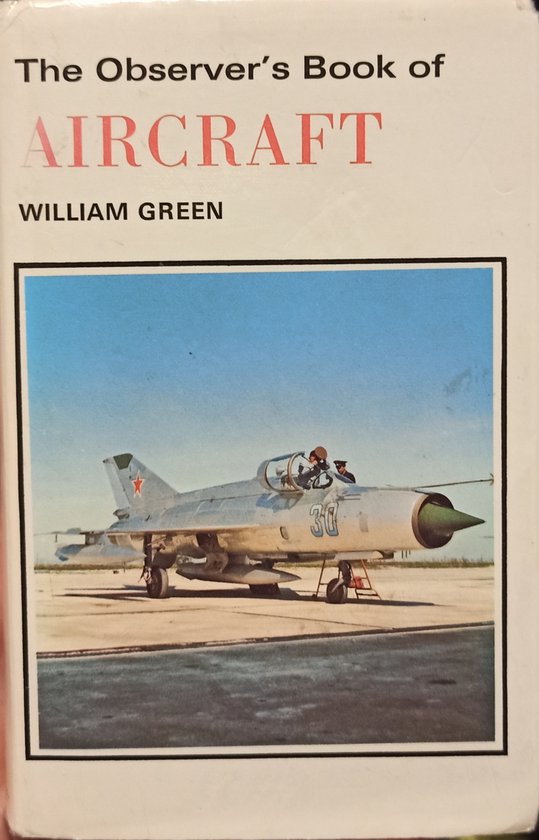
The Observer's Book of Aircraft
William Green
- 9780723215073
Samenvatting:
With this, the 21st annual edition, the Observers Book of Aircraft comes of age. The basic format has remained essentially unchanged over the past score and one years; the three-view general arrangement silhouettes are prepared by the same draughtsman, and the number of pages has remained unchanged, as has the number of aircraft illustrated and described. Indeed, the only obvious changes over the intervening years have been the retail price and the use of metric in addition to Imperial measures. But a comparison of the aircraft included in this edition and that of 1952 reveals clearly the enormity of the changes that have taken place over this period in the shape, size and performance of both civil and military aeroplanes.
It is perhaps instructive to note that almost exactly one-third of the aircraft types included in the 1952 edition of the Observers Book of Aircraft are still to be seen in the world's skies, and one cannot but help wonder as to what proportion of those included in the pages that follow will enjoy such longevity. At the time the 1952 edition was prepared, the only turbojet-driven commercial transport extant was the de Havilland Comet, and the Korean conflict had entered its final year, with encounters between F-86 Sabre fighters of the USAF and Soviet-supplied North Korean MiG-15s virtually a daily occurrence. As these words are penned, few indeed are the commercial passenger services that are not flown by turbojet-driven airliners, but the Sabre is still firing its guns in anger, its pilots now being members of the Pakistan Air Force and its primary targets still being progeny of the Mikoyan-Gurevich design bureau, but this time MiG-21s flown by the Indian Air Force.
Apart from the changes in appearance and performance of the aircraft types represented, there has been one other change over the years: the ratio of civil to military aircraft types has increased in the content matter of the Observers Book of Aircraft. The former do not yet preponderate, however, and their increased numbers merely reflect the growth of civil aviation rather than a tendency towards a more peaceful world. In fact, only four of 1971’s aircraft débutantes were intended specifically for civil application, while but one of those scheduled to commence their flight test programmes this year, the Airbus A-3O0OO0B, is a commercial aeroplane, underlining the fact that emphasis remains on the development of military aircraft.
Insufficient information had become available at the time of closing for press to permit inclusion of the most recent Soviet combat aircraft, such as the variable-geometry air superiority fighter and strategic bomber, dubbed Fearless and Backfire respectively by NATO, but western military débutantes that appear for the first time in this edition include the Lockheed S-3A Viking ASW aircraft, the Northrop YA-SA and Fairchild YA-1OA attack aircraft, and the McDonnel Douglas F-15 fighter. WILLIAM GREEN