
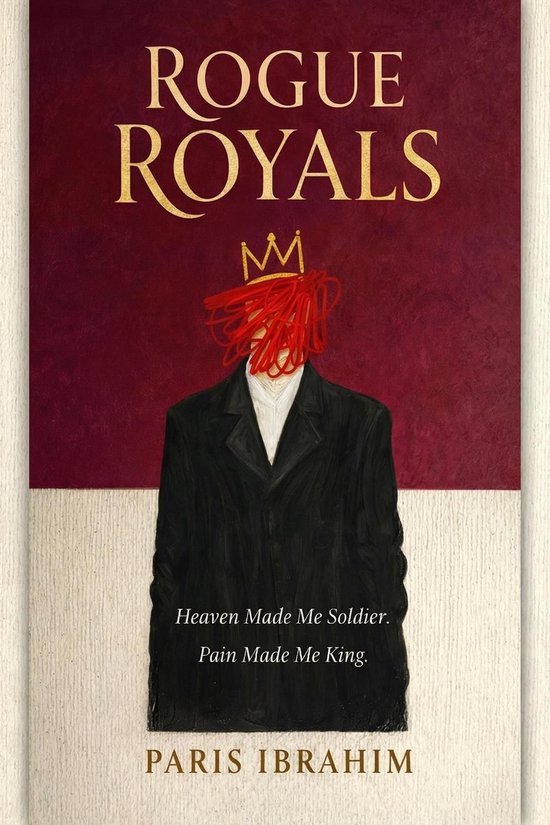
Rogue Royals
Paris Ibrahim
- 16 maart 2026
- 9798233570360
Samenvatting:
They called him the problem. He was the only one telling the truth.
Rogue Royals is the memoir of Paris Ibrahim — barrister from Lincoln's Inn, former analyst at Global Affairs Canada, former case officer at the British High Commission — and the story of what happens when the scapegoat stops running and turns around.
Born into a powerful South Asian military family, Paris spent thirty-eight years being told he was too sensitive, too difficult, too much. What they were actually describing was his threat. This is the book they never wanted written.
From a childhood of fireworks over the village for a three-day-old boy, to boarding schools and exile, to the penthouse above the Gulf where his grandmother settled a thirty-year score with a dinner knife while Lindsay Lohan was sentenced on the television in the corner — this memoir moves with the precision of a legal document and the heat of a confession.
It traces the Dubai years, the return home, and the psychological campaign that followed: the staged ambulance, the convoy of guards, the hospital room, and the night three British military colleagues arrived at 4 a.m. with EMF detectors to dismantle what had been built inside the walls of his bedroom.
At its heart, Rogue Royals is a story about narcissistic family systems, generational trauma, and what happens when the designated scapegoat begins to understand the game.
It ends in Mecca — hand in hand with his sister — a new year beginning in the courtyard of the Kaaba.
Rogue Royals is for everyone who grew up in a family that had a script — and finally stopped reading from it. It is for the South Asian child who was never allowed to say what was happening. It is for the scapegoat, the black sheep, the one they called difficult.
Named things lose their power.
This book names everything.