
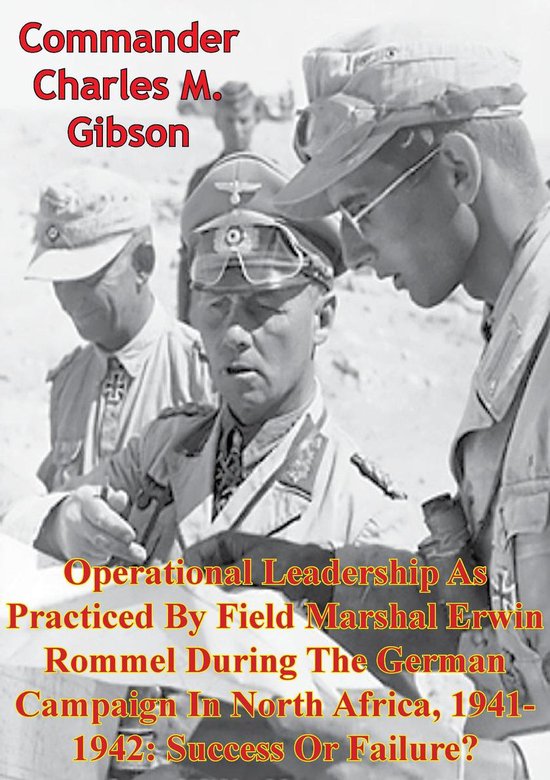
Operational Leadership As Practiced By Field Marshal Erwin R ...
Commander Charles M. Gibson
- 15 augustus 2014
- 9781782897255
Samenvatting:
The Germans entered the North African theater to alleviate pressure on the Italians and prevent the collapse of the Italian Fascist regime. Rommel arrived in North Africa, and despite orders to establish a blocking force, immediately went on the offensive with the objective of forcing the Allies out of North Africa. After two years of fighting, Rommel and his forces were defeated.
This paper analyzes the operational leadership of Field Marshal Erwin Rommel during the North African campaign of 1941-1942. It concludes that Rommel, despite being an accomplished tactical leader, was a poor operational leader. Rommel lacked the proper personality, military education, and military experience to obtain the broad view necessary to become a successful operational leader. His personal relationship with Hitler put Rommel in a position of authority he was not qualified to fulfill. Additionally, his inability as an operational commander to fully comprehend logistics and strategic objectives resulted in the German's defeat in North Africa.
The Joint Force Commander must ensure his operational commanders are more than just tacticians. A successful tactical leader will not automatically become a successful operational leader. Close scrutiny of potential operational commanders is a must to ensure the future leaders of the U.S. military will be able to accomplish military strategic and operational objectives.