
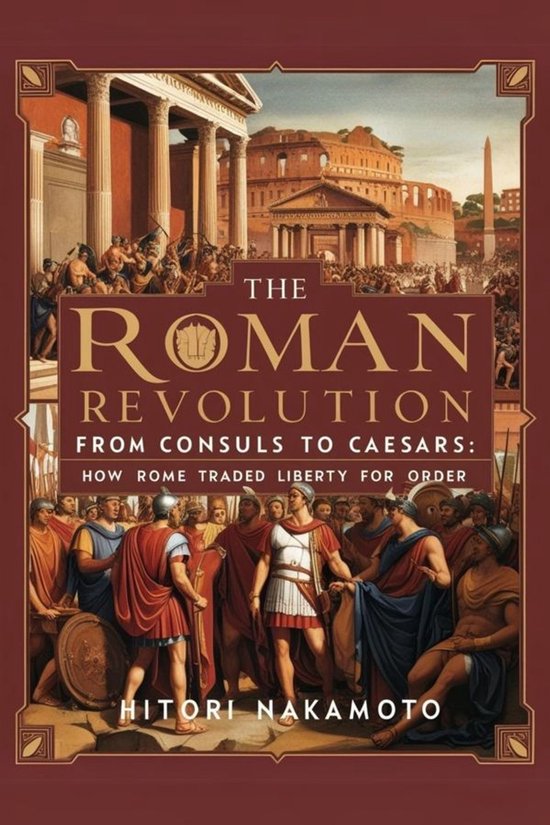
The Roman Revolution
nakamoto hitori
- 12 mei 2025
- 9791223979624
Samenvatting:
In 133 B.C, a young Roman tribune, Tiberius Gracchus, addressed the crowd and proposed something unheard of: that land be taken from the rich and restored to the poor.
It was, in theory, an invocation of Rome’s old values — the dream of a sturdy, self-sufficient citizen-farmer who would protect the Republic with his plow in one hand and his sword in the other.
But almost no one saw it that way. To the senators lounging in their marble villas, it felt like a revolution. And maybe it was. The story of how Rome moved from a republic to an empire is usually told in the language of decline. Corruption, ambition, decadence — these are the heavy words historians use.
But what if we looked at it differently? What if Rome’s revolution was not about the collapse of something old and good, but the creation of something new and necessary? What if, in trading liberty for order, Rome wasn’t making a tragic mistake, but following an inevitable logic?