
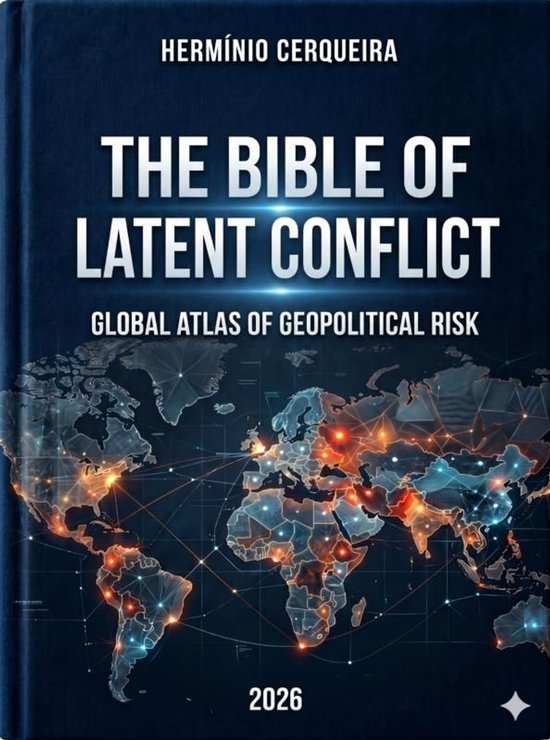
THE BIBLE OF LATENT CONFLICT
Herminio Cerqueira
- 23 april 2026
- 9789403888804
Samenvatting:
Without any exaggeration, sovereignty is the fundamental concept that structures the entire understanding of international relations in the modern world. From the birth of the Westphalian state system in 1648 to the present day, the fundamental question of “who is in charge” within a defined territory remains the most important—and, at the same time, the most contested—question in international politics. We argue that this primacy of sovereignty is not merely a legal convention or a political contrivance of the 17th and 18th centuries, but rather a fundamental geopolitical reality rooted in the nature of territorial power and in the logical impossibility of having multiple supreme authorities acting simultaneously over the same space. However, the concept that seemed so clear to Westphalia—one sovereign with absolute and indivisible power within a defined territory—is proving increasingly problematic, contested, and eroded in the 21st century. Moreover, this erosion is not merely theoretical or academic; its practical consequences are starkly evident in multiple simultaneous forms.