
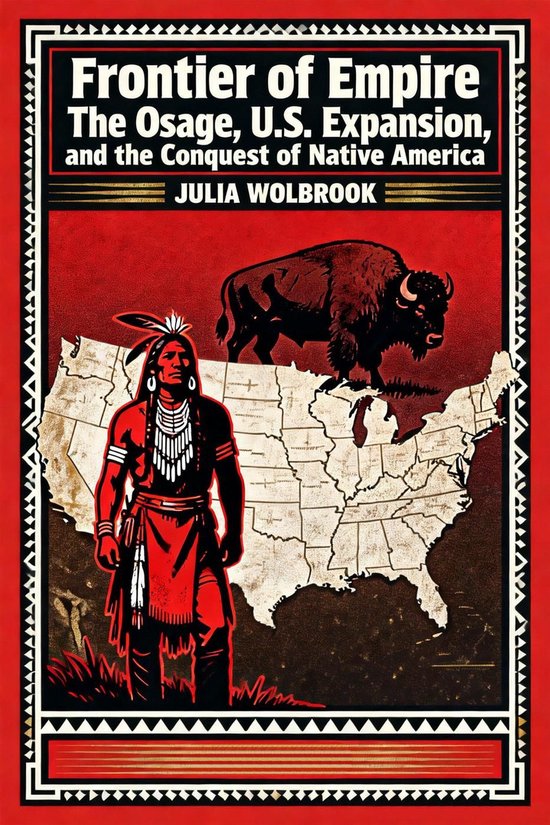
Frontier of Empire The Osage, U.S. Expansion, and the Conque ...
Julia Wolbrook
- 24 februari 2026
- 9798233270048
Samenvatting:
Frontier of Empire reframes the story of American westward growth by placing the Osage Nation at the center of the national narrative. Long before removal became federal law and long before Oklahoma became synonymous with exile, the Osage stood astride one of the most strategically important regions in North America. Their fate would become inseparable from the ambitions of an emerging republic determined to control land, trade, and sovereignty from the Mississippi River to the Great Plains.
Drawing on treaties, congressional debates, Supreme Court decisions, private correspondence, and military records, this book exposes the legal and economic architecture that powered U.S. expansion. It reveals that federal land ordinances, debt-based trade systems, boundary commissions, and removal policies were not isolated measures but coordinated instruments of territorial consolidation.
Readers will encounter pivotal figures such as Thomas Jefferson and Andrew Jackson not simply as presidents, but as architects of a system that transformed Native nations into "domestic dependent" entities under federal authority. Alongside the Osage story, the experiences of nations such as the Cherokee Nation illuminate how policy, law, and force converged to redefine sovereignty on the continent.
At its core, Frontier of Empire argues that American expansion was neither accidental nor chaotic, nor purely defensive. It was deliberate. Structured. Legalistic. And devastating in its consequences for Indigenous peoples whose territories became the proving ground of a new imperial model, one built not on overseas colonies, but on internal conquest.
This is not simply a history of removal. It is a history of design.
Bold, meticulously documented, and unflinching in its analysis, Frontier of Empire challenges readers to reconsider the foundations of the United States and the cost of its rise. For scholars, students, and general readers alike, it offers a powerful reinterpretation of how empire was constructed on the North American frontier, and who paid the price.