
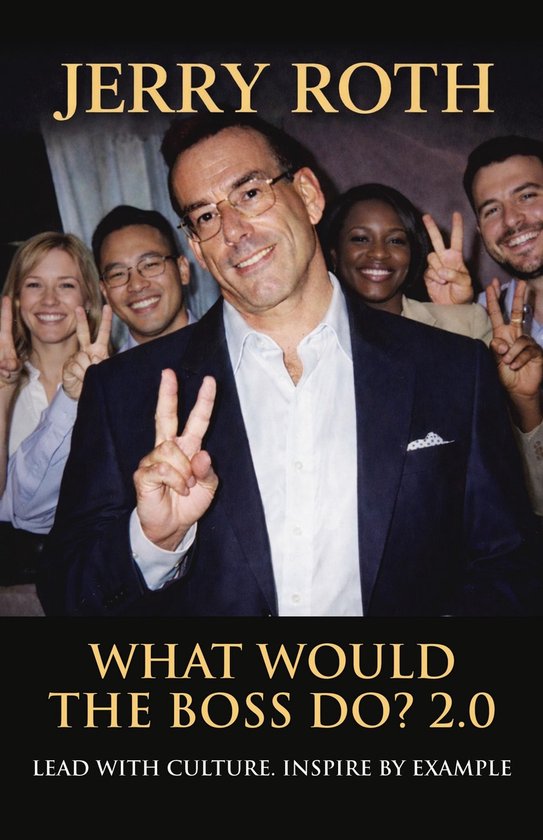
What Would the Boss Do? 2.0
Jerry Roth
- 15 februari 2026
- 9798885323857
Samenvatting:
There are companies in the U.S. that are over 250 years old. They were able to achieve their longevity on purpose, not by accident or luck.
Have you ever worked for a boss that was only in business for the money? Have you ever been that boss? This story is what happens when you switch from "What can I do to help you? to What can you do for me? and the repercussions that come from allowing greed to run your business.
It's the story of how Jerry read as many books on business as he could then applied that knowledge to create a multi-million-dollar international distribution company where employees loved to work and customers loved to shop.
Imagine Harvey Mackay and Ken Blanchard joining Simon Sinek to write a book that provides a set of instructions for retaining employees and customers while spending very little on advertising and help wanted ads.
You may have accidently started your company, as many entrepreneurs do, but if you decide early on to create a culture that could sustain the company for many years, You’re miles ahead of your competition. If whatever you believe in, whatever your reason for coming to work is easily seen by your staff, they should know, What Would the Boss Do?
In the early stages, both in business and life, we tend to be focused on the near term, tomorrow, next week, month or year. Our goals are simple; In business it’s this month, this quarter, this year, planning and praying to make a profit and stay alive,
What separates the centenarians from the adolescents is the change in focus from next quarter to 20 years from now. How we eat, play, and learn, all create new habits that will carry us into the future. Focusing on the people and not just the profit, also creates long-term habits.
Life, like business, needs to be managed and management needs to have a boss. If you are not the boss of your own life, someone else will be, usually the people you hang out with. Likewise in your business, if your staff don’t know what the boss would do, they will make decisions and act in accordance with their own habits, whether good or bad.
You need to be the leader of your culture, and you need to lead by example.
As more and more people live to blow out one hundred candles on their cake, young people need to start thinking about their habits now rather than later. The bank statistic that about half of all new businesses will fail inside of five years means you need to have your habits in place within the first year. And you need to know what your purpose is. Why did you start your business? Why do you come to work every day?
If you answered, “To make money,” your odds of survival are diminished. If, however, you answered, “To be around for a long time and be healthy enough to enjoy it,” then your odds are much better than the average small business.
You are the boss. You make the rules. You develop the habits. Make sure you lead with culture and inspire by example.
What Would the Boss Do?
Follow along as Jerry helps Mali turn her struggling mortgage loan processing company into a job she doesn't need a vacation from even though she now has time to take one.