
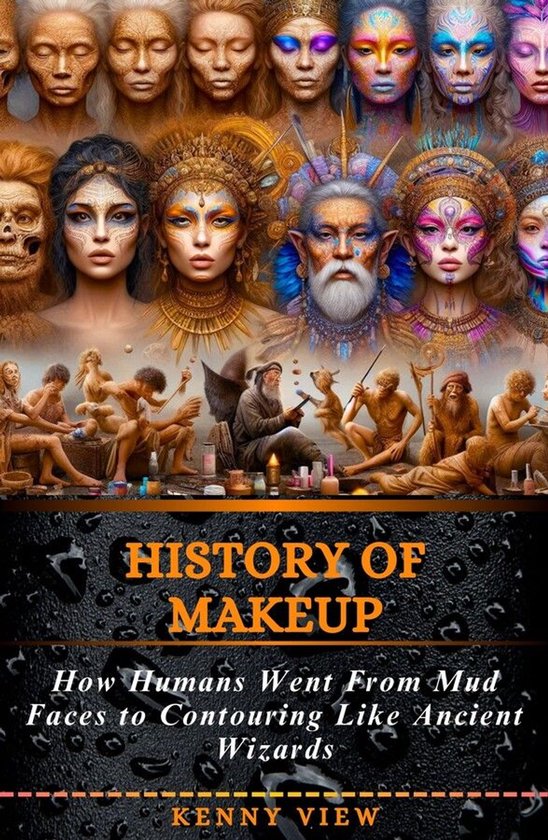
History of Makeup
Kenny View
- 02 juni 2026
- 9791224478171
Samenvatting:
History of Makeup: How Humans Went From Mud Faces to Contouring Like Ancient Wizards
This book explores the strange and surprisingly serious evolution of makeup as a human technology—starting from early people smearing mud, ash, and crushed minerals onto skin not just for beauty, but for protection, ritual identity, and intimidation purposes. It treats cosmetics like a forgotten branch of anthropology where faces became experimental surfaces long before mirrors ever existed.
Across ancient civilizations, makeup transforms from survival craft to symbolic language: Egyptians mapping eyeliner like protective spells, Romans whitening faces to signal status, and various cultures treating pigments as social signals, spiritual armor, or quiet rebellion. The narrative reads like humans slowly learning that the face is not fixed—it is editable, writable, and sometimes dangerously expressive.
Eventually, the story arrives in the modern era where contouring behaves like optical illusion engineering and beauty routines resemble alchemy with brushes, powders, and light manipulation. What began as mud and charcoal becomes a global system of aesthetics, identity construction, and digital-age performance—where faces are still being rewritten, just with better tools and far more mirrors.