
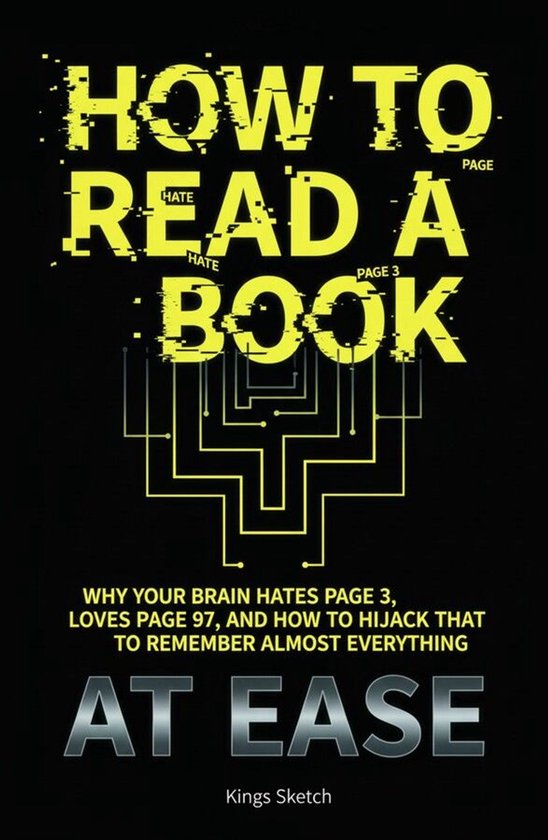
How to Read a Book at Ease
Kings Sketch
- 27 maart 2026
- 9791224415947
Samenvatting:
How to Read a Book at Ease
Why Your Brain Hates Page 3, Loves Page 97, and How to Hijack That to Remember Almost Everything
This is not a guide to reading—it is a quiet rebellion against how your mind pretends to work. Somewhere between page 1 and page 3, attention slips, not because the book fails, but because the brain resists commitment. It stalls, drifts, looks for escape. Yet by page 97, something strange happens: resistance fades, and reading becomes almost automatic, as if the mind has surrendered to a rhythm it once rejected. The shift feels natural, but it is anything but accidental.
The narrative explores this hidden pattern, where boredom is not a flaw but a threshold. Early pages demand energy—focus, patience, willingness—while later pages reward momentum, turning effort into flow. Memory follows the same rule: what feels difficult at first often becomes the most deeply remembered, not despite the struggle, but because of it. The brain, reluctant at the beginning, quietly rewires itself through repetition, turning scattered words into something structured and lasting.
By the end, reading is no longer about discipline or speed. It becomes a system you can bend—starting small, pushing through resistance, and letting momentum carry you forward. The trick is not to fight your brain, but to understand its patterns and use them. What once felt like friction becomes an entry point, and somewhere along the pages, you realize that remembering is not about trying harder—it is about moving differently through the text until it begins to stay with you.