
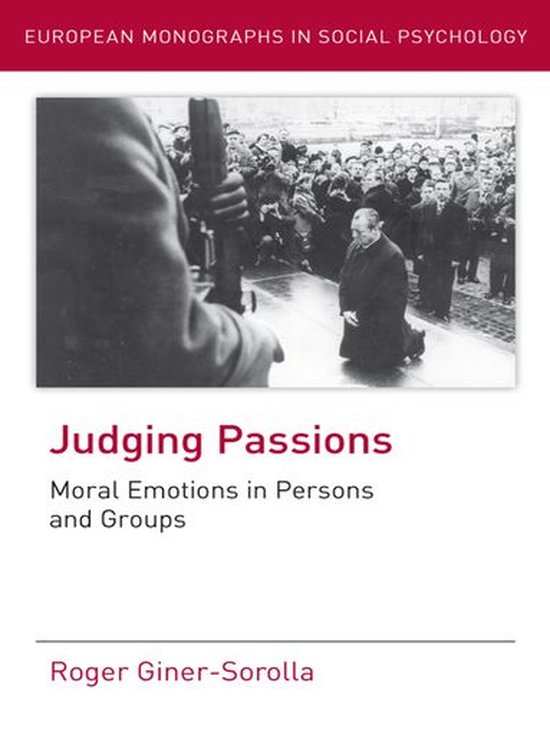
Judging Passions
Roger Giner-Sorolla
- 01 maart 2013
- 9781136341939
Samenvatting:
Psychological research shows that our emotions and feelings often guide the moral decisions we make about our own lives and the social groups to which we belong. But should we be concerned that our important moral judgments can be swayed by "hot" passions, such as anger, disgust, guilt, shame and sympathy? Aren't these feelings irrational and counterproductive?
Using a functional conflict theory of emotions (FCT), Giner-Sorolla proposes that each emotion serves a number of different functions, sometimes inappropriately, and that moral emotions in particular are intimately tied to problems faced by the individuals in a group, and by groups interacting with each other. Specifically, the author suggests that these emotions help us, as individuals and group members, to:
- Appraise developments in the environment
- Learn through association
- Regulate our own behavior
- Communicate convincingly with others.
Drawing on extensive research, including many studies from the author's own lab, this book shows why emotions work to encourage reasonable moral behaviour, and why they sometimes fail.
This is the first single-authored volume in the field of psychology dedicated to a separate examination of the major moral and positive emotions. As such, the book is ideal reading for researchers, postgraduates and undergraduates of social psychology, sociology, philosophy and politics.