
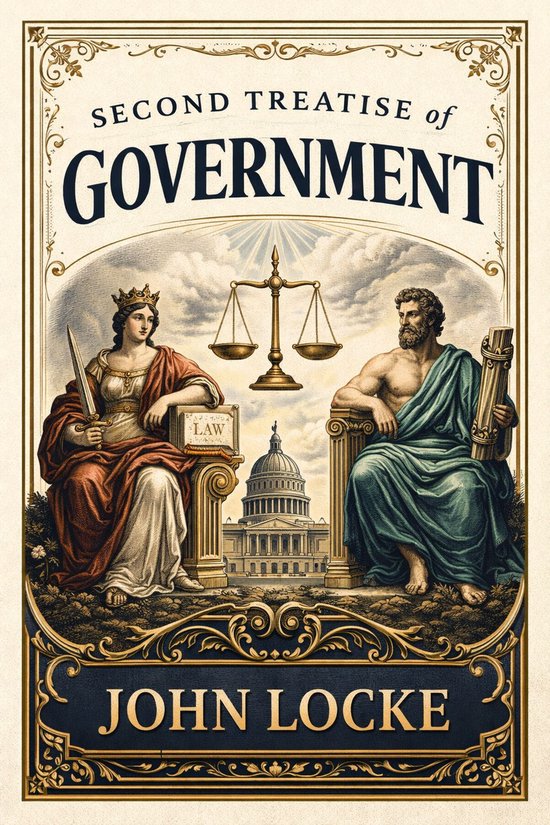
Second Treatise of Government
John Locke
- 16 april 2026
- 9789378644863
Samenvatting:
In the Second Treatise of Government, John Locke outlines a vision of political authority grounded in natural rights and consent. Rejecting absolute monarchy, he argues that governments exist to protect life, liberty, and property—and derive legitimacy from the people. When rulers fail in this duty, citizens have the right to resist. Locke’s ideas on the social contract, separation of powers, and limited government profoundly influenced modern democracies. Clear and principled, this work remains central to debates on freedom, governance, and human rights. It offers a timeless framework for understanding what makes a just society. This edition features clean, readable formatting, carefully preserved text, and is ideal for students, book clubs, and collectors of public domain classics. Discover why this work continues to influence literature, culture, and modern thought across generations. This edition features clean, readable formatting, carefully preserved text, and is ideal for students, book clubs, and collectors of public domain classics. Discover why this work continues to influence literature, culture, and modern thought across generations. This edition features clean, readable formatting, carefully preserved text, and is ideal for students, book clubs, and collectors of public domain classics. Discover why this work continues to influence literature, culture, and modern thought across generations.