
Four Motors, One Mission
Etienne Psaila
- 24 oktober 2025
- 9781923625433
Samenvatting:
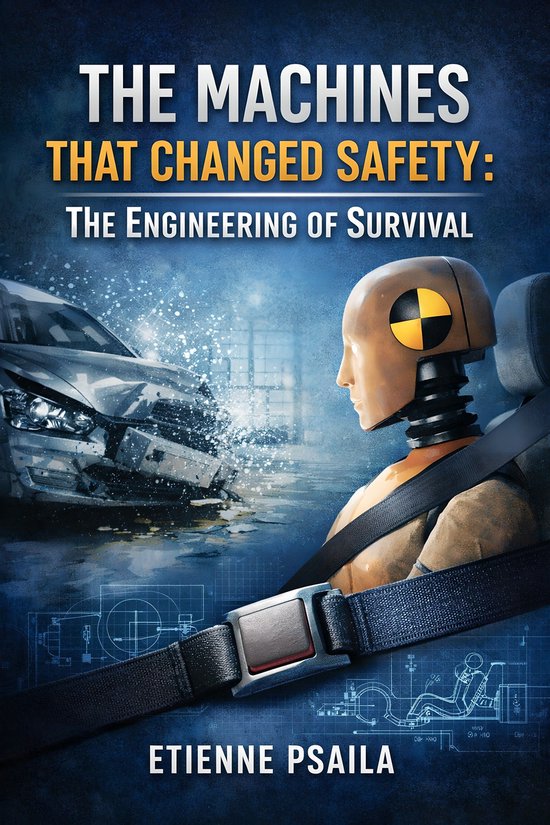
A single, deceptively simple restraint changed what the world expected from an automobile. Before the three-point seat belt, crashes were often treated as misfortune and injury as an inevitable cost of mobility. After it, survival became something engineers could pursue deliberately—measured in forces, injury metrics, and outcomes rather than in promises and slogans.
This independent, fact-based book traces how the three-point belt and the wider culture of crash evidence helped shift automotive progress away from pure performance and styling and toward measurable reductions in death and life-altering injury. It follows the belt’s journey from early skepticism to global standard, showing how design details, usability, regulation, and public acceptance determined whether a life-saving idea actually saved lives.
Along the way, it opens the “black box” of occupant protection—crash science, test vocabulary, pretensioners and load limiters, airbag integration, and today’s sensor-driven systems that aim to prevent crashes altogether. The result is a clear narrative of how survival engineering became one of the most consequential forms of automotive innovation—quietly, daily, for almost everyone.
Trademark disclaimer: This book is an independent work and is not affiliated with, endorsed by, or sponsored by Volvo Car Corporation or any of its subsidiaries or affiliates. “Volvo” and any other referenced brand names or trademarks are the property of their respective owners and are used for identification and informational purposes only.