
Past Power, Future Current
Etienne Psaila
- 26 oktober 2025
- 9781923625471
Samenvatting:
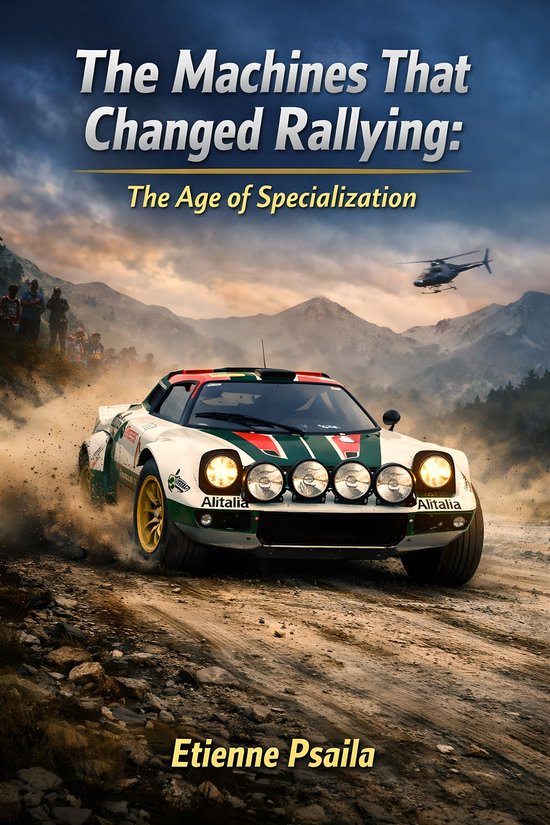
Rallying did not become modern by accident. As the sport’s stages grew faster, its championships more valuable, and its margins tighter, the old formula of tough, adaptable production cars gave way to something sharper and more deliberate. This independent book tells the story of that transformation through the machines, ideas, and competitive pressures that pushed rallying into the age of specialization.
Focusing on the rise of purpose-built thinking, the book explores how engineering priorities, homologation rules, factory-team strategy, driver feedback, and technical ambition combined to reshape the sport. At the center is the breakthrough era that changed how rally cars were designed, how championships were won, and how manufacturers used competition to redefine what a road car could mean.
Written in a fact-based, narrative style, this book explains how rallying evolved from a contest of endurance and improvisation into a discipline driven by purpose, precision, and regulation-aware innovation. It is an independent historical work intended for readers interested in motorsport history, automotive engineering, and the culture of rally competition.
Trademark disclaimer
This is an independent, unofficial publication and is not authorized, endorsed, sponsored, or approved by Lancia, Ferrari, Alitalia, the FIA, WRC Promoter GmbH, or any other company, manufacturer, team, championship, or rights holder mentioned in the text. All trademarks, service marks, trade names, and brand names are the property of their respective owners and are used solely for identification and historical reference purposes.