
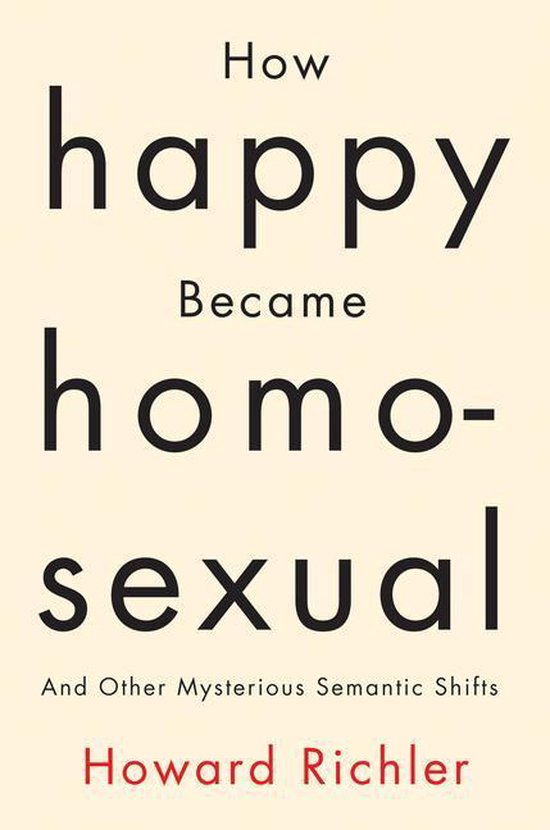
How Happy Became Homosexual
Howard Richler
- 24 mei 2013
- 9781553802310
Samenvatting:
An old joke goes like this: What’s the difference between a good girl and a nice girl? Answer: The good girl goes to a party, goes home then goes to bed, whereas the nice girl goes to the party, goes to bed, then goes home. The distinction made between the two types of young ladies would probably have been appreciated by Shakespeare. While we think of “nice” nowadays as being a synonym for pleasant it wasn’t always so; originally the word’s meaning conveyed the naughtiness implied in the joke. It wasn’t until the middle of the 18th century that this word conveyed the sense of pleasantness that we now associate with the word. In his book How Happy Became Homosexual, and Other Mysterious Semantic Shifts, Richler educates and entertains us while explaining how words such as “nice” and “gay” have changed meanings. Surprisingly, we discover that even many of our nouns and verbs have been in a constant state of flux. For example, originally “jeopardy” was a term used in chess and “to fizzle” meant “to break wind silently.” This morphing of meanings is ever-present, and Richler explains how, even in the last twenty years or so, words such as “fulsome” are in the midst of a reversal of meaning. So whether you are gay (happy), gay (homosexual) or a melancholy heterosexual, Richler will lead you into a word-world of entertaining change.