
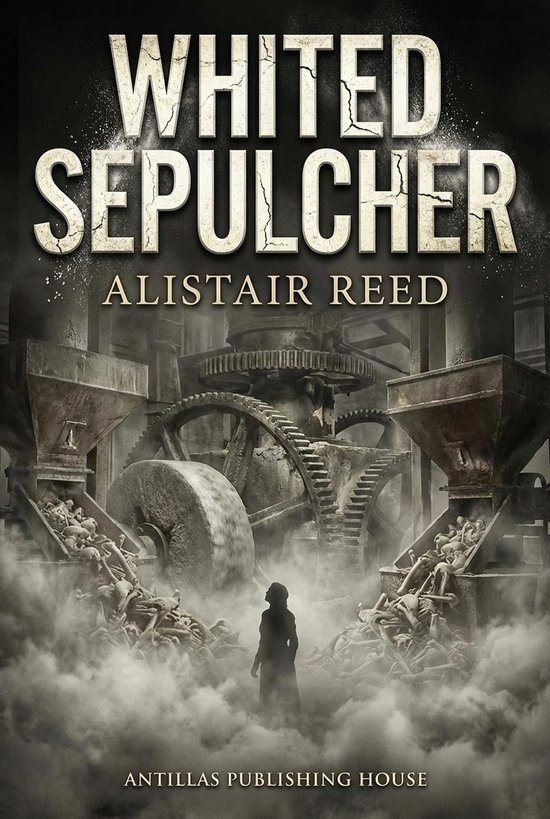
Whited Sepulcher
Alistair Reed
- 27 januari 2026
- 9798233032691
Samenvatting:
The dust covering Rusk Mills isn't chalk. It's what remains of the forgotten dead.
Enoch Rusk is a man defined by debt and calculation. When he inherits Rusk Mills from an estranged uncle, he sees it only as a ledger to be balanced. Located in a sodden valley in northern England, the massive, windowless Victorian structure has ground "calcium phosphate" for the ceramics industry for over a century.
But from the moment Enoch steps into the valley, he tastes the grit in the air. A fine, sticky white dust coats every surface, turning to paste on his skin. Inside, the roar of the granite millstones is deafening, and the raw materials in the silos are not the animal bones listed in the shipping manifests. They are human. Thousands of tons of skulls and femurs, imported from the cleared plague pits of Europe, destined to become fine porcelain.
Enoch's attempt to modernize the failing mill uncovers a gruesome truth. The millstones are jamming not from age, but because modern dental implants—gold and titanium from illegal, fresh sources—are harder than the stones. The machinery is hungry, the river water isn't enough to cool the friction, and the foreman, Gant, knows the only lubricant that keeps the wheels turning is blood.
Enoch realizes too late that he hasn't inherited a business. He has inherited a mouth. And the Rusk family aren't the owners; they are the feeders.