
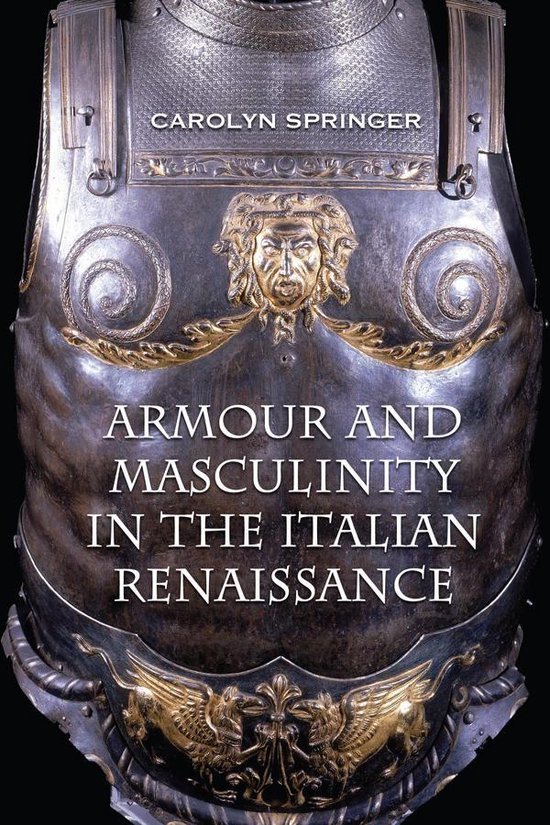
Armour and Masculinity in the Italian Renaissance
Carolyn Springer
- 15 juli 2010
- 9781442699021
Samenvatting:
During the Italian Wars of 1494 to 1559, with innovations in military technology and tactics, armour began to disappear from the battlefield. Yet as field armour was retired, parade and ceremonial armour grew increasingly flamboyant. Displaced from its utilitarian function of defense but retained for symbolic uses, armour evolved in a new direction as a medium of artistic expression.
Luxury armour became a chief accessory in the performance of elite male identity, coded with messages regarding the owner's social status, genealogy, and political alliances. Carolyn Springer decodes Renaissance armour as three-dimensional portraits through the case studies of three patrons of luxury armourers, Guidobaldo II della Rovere (1514-75), Charles V Habsburg (1500-58 and Holy Roman Emperor from 1519-56), and Cosimo I de'Medici (1519-74). A fascinating exposition of male self-representation, Armour and Masculinity in the Italian Renaissance explores the significance of armour in early modern Italy as both cultural artefact and symbolic form.