
The Pauson-Khand Reaction
Ramon Rios Torres
- 01 maart 2012
- 9781118308639
Samenvatting:
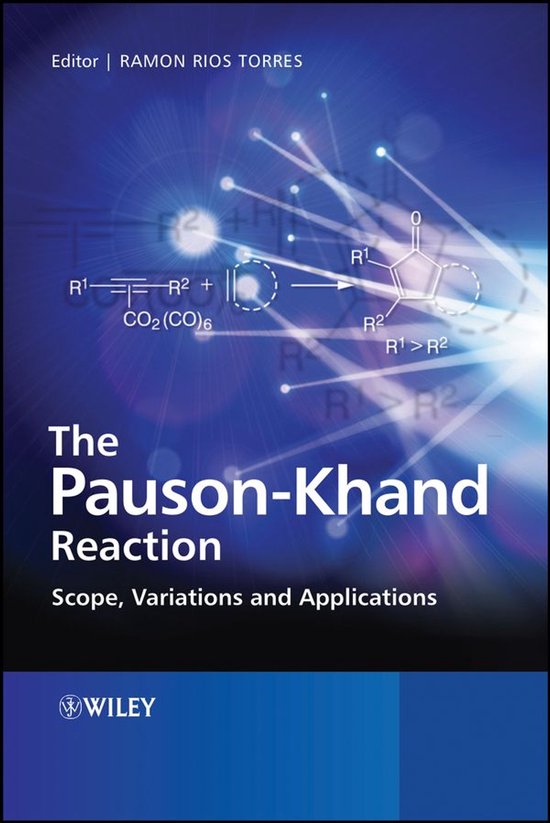
The Pauson-Khand reaction is an important reaction in the field of organic chemistry. It involves the transition-metal catalysed cycloaddition of an alkyne, an alkene and carbon monoxide, to produce cyclopentenones. The importance of this reaction originates from its high value in transforming simple components into the synthetically useful cyclopentenone unit, in which a high degree of molecular complexity can be achieved in a single step, with impressive stereochemical and regiochemical control.br/br/The Pauson-Khand Reaction investigates the nature and many variations of this reaction.br/br/Topics covered include: bulletthe mechanisms of Pauson‐Khand-type reactionsbulletnon chiral intramolecular and intermolecular versions of Pauson‐Khand reactionsbulletasymmetric Pauson‐Khand reaction using chiral auxiliariesbulletthe enantioselective Pauson‐Khand reactionbulletPauson‐Khand reactions catalysed by metals other than cobaltbulletunconventional Pauson‐Khand reactionsbulletthe Pauson‐Khand reaction in total synthesis/bulletlistbr/br/Presenting a comprehensive overview of this fundamental reaction, The Pauson-Khand Reaction will find a place on the bookshelves of any organic or organometallic chemist.