
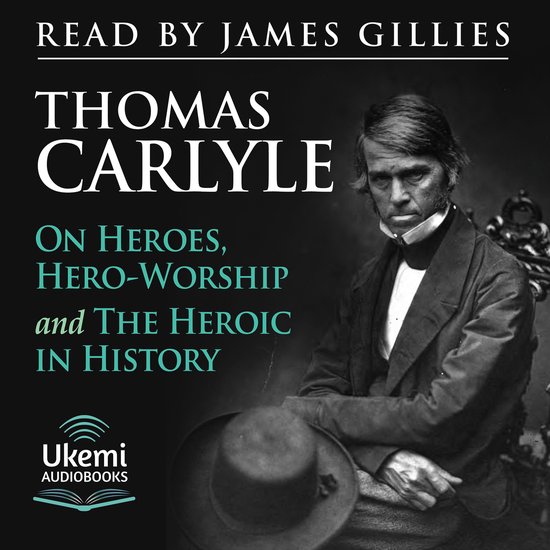
On Heroes, Hero-Worship and the Heroic in History
Thomas Carlyle
- 10 december 2021
- 9781004134717
Samenvatting:
Though uncompromising, polemical and argumentative, Thomas Carlyle (1795-1881) made a lasting impact on 19th-century culture as a multi-talented man of letters. And though his lengthy history of the French Revolution proved his major scholarly legacy, On Heroes, Hero-Worship and the Heroic in History remains perhaps his most popular and accessible work. It presented his deep-seated belief that ‘Universal History, the history of what man has accomplished in this world, is at bottom the History of the Great Men who have worked here’.
It is with this bold declaration that Carlyle opened the collection of six lectures that comprise ‘On Heroes’. Initially delivered in 1840, he published them a year later in an expanded form, and the book’s popularity gave him the broader national presence to which he aspired. The six lectures covered a wide range of man’s activities, but of particular interest were the categories, as much as the individual figures.
Lecture I. The Hero as Divinity: Odin. Paganism: Scandinavian Mythology.
Lecture II. The Hero as Prophet. Mahomet: Islam.
Lecture III. The Hero as Poet. Dante, Shakespeare.
Lecture IV. The Hero as Priest. Luther. Reformation: Knox; Puritanism.
Lecture V. The Hero as Man of Letters. Johnson, Rousseau, Burns.
Lecture VI. The Hero as King. Cromwell, Napoleon: Modern Revolutionism.
These categories challenged opinions from the outset: Carlyle’s fundamental approach, breaking away from an overbearing militaristic description of the hero figure in history, was revolutionary. He chose to take a more radical view, less hide-bound by the conventional constraints of his day, placing the poet, the philosopher and the revolutionary where, in popular imagination, the conqueror and the champion held sway. This was reflected further in the individuals he chose to represent the categories. If modern-day sensibilities may take a less emphatic ‘Great Men’ approach to history, Carlyle’s original work continues to provide an engaging template for contemporary revision.